

Key Takeaways
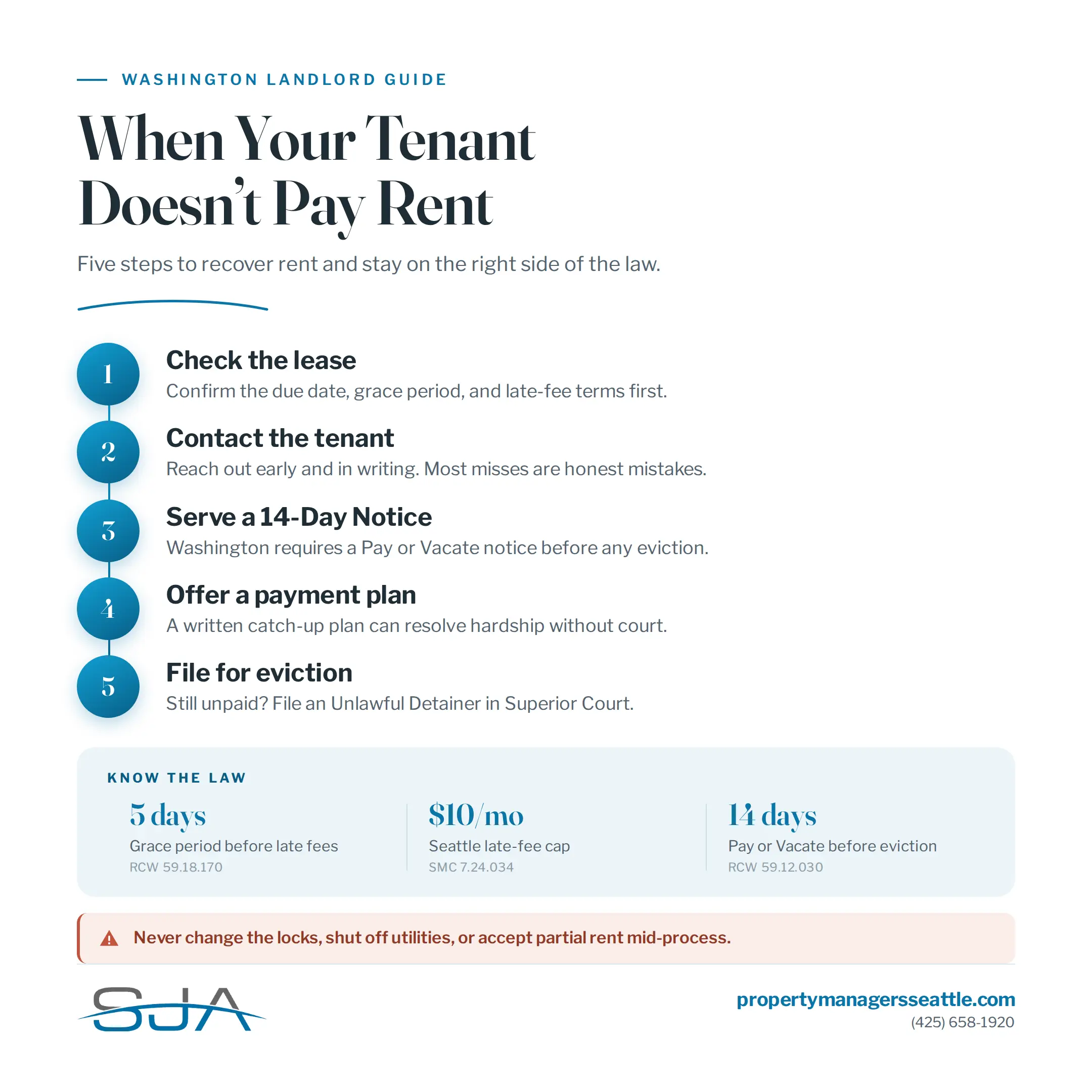
- Washington requires a 14-Day Pay or Vacate Notice before any eviction for unpaid rent, and a landlord cannot file in court until those 14 days pass.
- Late fees cannot be charged until rent is more than five days past due (RCW 59.18.170), and Seattle caps late fees at $10 per month (SMC 7.24.034).
- Early, documented communication resolves most missed payments, and a written payment plan can settle a genuine hardship without going to court.
- Self-help removal is illegal: changing locks, shutting off utilities, or accepting partial rent mid-process can derail the case and expose the landlord to liability.
- Eviction in Washington runs through an Unlawful Detainer action in Superior Court, where any misstep in notice or process can delay or dismiss the case.
It’s one of the most frustrating situations a landlord can face: rent is due, the first of the month has come and gone, and your tenant still hasn’t paid.
Whether it’s the first time or part of an ongoing pattern, missed rent can throw off your cash flow, create tension with your tenants, and potentially put your property at risk. But acting without understanding Washington’s rental laws can cause even more problems.
The good news is that you have legal options, and you don’t have to navigate them alone.
Our team at SJA Property Management has spent the last 16 years making life easier for hundreds of landlords just like you, and in this guide, we’ll walk you through exactly what to do when your tenant doesn’t pay rent in Washington, including:
- The legal steps to follow (and what to avoid)
- Tips for communicating with tenants
- When to issue a formal notice
- How to prevent missed rent from happening in the first place
Let’s get started.
Step 1. Double Check the Lease and Payment Terms
Also check for any renewal addendums or payment arrangement notes that may have changed the original terms. If rent was due on the 1st and it’s now the 5th with no communication, you may already be in a position to take the next step, but having your lease reviewed and documented ensures you’ll be on solid legal ground.
Make a copy of the lease and highlight relevant sections before you reach out to the tenant. That way, if you need to reference it in writing or court, you’re prepared.
This might sound obvious, but many rent disputes come down to confusion about what was agreed to in writing.
Here’s what to look for:
- Rent due date: most leases require payment on the 1st of the month, but check if there’s any flexibility or grace period.
- Grace period: Washington law bars a landlord from charging a late fee until rent is more than five days past due (RCW 59.18.170). This five-day window applies to every residential tenancy and a lease cannot shorten it. A landlord can still serve a pay or vacate notice the day after rent is due, but no late fee attaches during those first five days.
- Late fee terms: the lease must authorize a late fee in writing for one to be charged. Washington caps residential late fees at $75 per month statewide (RCW 59.18.170). Seattle is stricter, with a $10 per month maximum since June 2023, and Seattle also bars charging the tenant for preparing or delivering a late notice.
- Preferred payment methods: verify whether the tenant is required to pay through a specific portal or system.
Step 2. Contact the Tenant Promptly and Professionally
Once you’ve confirmed the rent is officially late, the next step is to reach out quickly and directly.
A missed rent payment doesn’t always mean a tenant is avoiding their responsibilities. It could be a mistake, a temporary hardship, or even a glitch in their payment method. The sooner you reach out, the better your chances of resolving the issue without escalation.
Here’s the best way to reach out:
- Start with a friendly phone call, email, or text, whichever method you’ve used with them before.
- Use calm, respectful language and give them a chance to explain.
- Ask simple questions like:
- “I noticed rent hasn’t come through yet, just wanted to check in and see if everything’s okay.”
- “Is there anything I can help clarify about this month’s rent or the lease terms?”
Even if the conversation is casual at first, follow up in writing (email is best). This creates a clear record that:
- You made a good-faith effort to resolve the issue
- You gave the tenant a chance to catch up
- You complied with Washington’s legal process for addressing nonpayment
Avoid making verbal agreements about payment plans or delays. If the tenant requests a short extension, get it in writing, ideally signed by both parties.
If you find yourself feeling a bit frustrated at this point, just remember that starting with respectful communication can preserve the relationship and set you up for a smoother process if formal action becomes necessary.
Step 3. Send a Formal Late Rent Notice (If Required)
If the rent still hasn’t been paid after initial contact, or your tenant stops responding, it’s time to take formal action. In Washington State, that begins with delivering a 14-Day Pay or Vacate Notice.
This is a legal requirement before you can begin eviction proceedings.
What Is a 14-Day Pay or Vacate Notice?
This notice gives your tenant 14 calendar days to either:
- Pay the full amount of rent owed, or
- Vacate the property
If they do neither, you can then move forward with a formal unlawful detainer (eviction) filing in court.
Washington law requires that you serve this notice in one of the following ways:
- Hand-delivered to the tenant (or someone of suitable age/responsibility at the property)
- Posted in a conspicuous place on the rental property and mailed on the same day
- Certified mail (though this method alone may delay your timeline)
Always keep a copy of the notice and proof of service for your records. If the case goes to court, you’ll need to show you followed the correct process.
If your lease has specific late rent procedures, honor them but don’t delay too long. The longer unpaid rent goes unaddressed, the harder it becomes to recover.
Step 4. Consider a Temporary Payment Plan (If Appropriate)
If your tenant reaches out and explains a legitimate hardship like a job loss, medical emergency, or another short-term setback, you may want to consider offering a payment plan instead of heading straight for eviction.
This can be a win-win:
- You keep rent coming in (even if delayed)
- Your tenant avoids displacement
- You save time and legal fees associated with eviction
It can also backfire, so it’s best to consider this option when the tenant has a history of paying on time, communicates openly and promptly, and is proactively providing a clear plan to catch up within a reasonable timeframe.
It’s also important that you are comfortable with the timeline and terms as the property owner.
If you decide to move forward with a payment plan, it needs to be put in writing and should include:
- The total amount owed
- A specific repayment schedule (e.g. $500 by the 15th, $500 by the 30th)
- Clear terms for what happens if they miss a payment
- A statement that this does not waive your right to proceed with eviction if they default
In some cities like Seattle, there may be local ordinances requiring landlords to offer payment plans under certain conditions. Be sure to check local rules or work with a full-service property manager that is familiar with your city’s laws.
Step 5. If Rent Still Isn’t Paid, Begin the Eviction Process
If your tenant ignores the 14-Day Pay or Vacate Notice or refuses to pay rent without making arrangements, you have the legal right to begin eviction proceedings under Washington law.
This is known as filing an Unlawful Detainer Action in court.
Here’s how the process works in Washington:
- Wait until the 14-day notice period expires.
You can’t file in court until the full 14 days have passed. - File for eviction with your local Superior Court.
You’ll need to submit legal paperwork, pay filing fees, and provide proof that you served the notice properly. - Attend a court hearing.
If the tenant doesn’t respond or loses the case, the judge will issue a Writ of Restitution, allowing the sheriff to remove them if needed. - Work with the sheriff for physical removal (if necessary).
You cannot change the locks or remove a tenant yourself. This must go through proper legal channels.
Unlike some states, evictions in Washington are highly regulated, and any misstep (like improper notice delivery or accepting partial rent mid-process) can delay the case or get it dismissed.
If you’ve never handled an eviction before or if you just want it done right, it’s strongly recommended that you work with either a landlord-tenant attorney or a property management company like SJA that handles legal compliance and eviction support for you.
This is about protecting your liability and income, so don’t cut corners. If you are handling the eviction yourself be sure to check our Washington eviction guide for useful info in this crucial step.
Watch Out For These Four Common Mistakes
When a tenant doesn’t pay rent, emotions can run high, but acting too fast or outside the law can create far bigger problems than a missed payment. Even well-meaning landlords sometimes make costly mistakes when trying to handle nonpayment on their own.
Here are the most common missteps to avoid:
🚩 Don’t change the locks or shut off utilities
Even if the tenant has gone silent or stopped paying altogether, you cannot physically remove them or interfere with their access to the property. This is considered an illegal “self-help eviction” and can get you sued.
🚩 Don’t harass or threaten the tenant
Repeated calls, confrontational texts, or showing up at the property unannounced can be interpreted as harassment. Always communicate respectfully and keep things in writing.
🚩 Don’t accept partial payments mid-process
If you’ve already served a 14-day Pay or Vacate Notice and then accept a partial rent payment, it could reset the eviction clock. Only accept partial payments if you’re formalizing a written repayment agreement.
🚩 Don’t skip documentation
Everything from your first message to your notice of eviction should be documented and time-stamped. This protects you if the case ends up in court and helps show that you followed due process.
If you’re unsure about what’s allowed or what the next step should be, pause and get guidance. One wrong move can delay the process or put you on the hook legally.
How a Property Manager Can Protect You
Handling missed rent, delivering legal notices, and navigating eviction laws is a lot of work. Mistakes can cost you time, money, and peace of mind.
There’s a reason most rental property owners prefer to hire a property management company to take all these responsibilities off their hands.
At SJA Property Management, we handle all these tasks for you, but we’ve also developed processes and policies that help prevent missed rent issues from happening in the first place.
Here’s how we protect our clients:
- 98% of our tenants pay on time
Thanks to strict screening and clear lease enforcement, we consistently maintain strong rent collection rates. - We communicate early and often
If rent is late, we’re on it, promptly contacting the tenant, documenting the issue, and keeping you in the loop. - We handle legal compliance for you
From issuing the 14-Day Pay or Vacate Notice to coordinating court filings (if needed), we follow every legal step to protect your investment. - We act quickly, so you don’t have to
You never have to chase a tenant, track down legal forms, or attend court alone. We manage the process from start to finish. - We help you avoid eviction altogether
With proactive maintenance, strong tenant relationships, and hands-on management, evictions are rare. In fact, our eviction rate is below 0.01% for tenants we place.
Whether you’re managing one rental or a dozen, we’re here to make your life easier, not more stressful.
Review: What to Do When Your Tenant Doesn’t Pay Rent
Dealing with a tenant who doesn’t pay rent is stressful but it doesn’t have to derail your investment. The key is knowing your legal rights, acting quickly, and following Washington’s required steps.
Let’s recap:
- Start with the lease and know your terms and payment timelines
- Communicate early, but document everything
- Use the proper 14-Day Pay or Vacate Notice if payment isn’t made
- Avoid illegal shortcuts like changing locks or accepting partial rent without an agreement
- Get help when the situation calls for it, especially if eviction becomes necessary
At SJA Property Management, we believe landlords shouldn’t have to chase down rent or navigate legal headaches alone. With proven screening, clear lease enforcement, and prompt tenant communication, we’ve helped hundreds of owners avoid the stress entirely with 98% on-time rent payments and almost no evictions.
And if you’re ready for fewer rent issues and more peace of mind, click here to give us a call.
Frequently Asked Questions
What happens if you don’t pay rent in Seattle?
If you don’t pay your rent in Seattle, your landlord will serve you with a Late Payment Notice. If you do not acknowledge or pay after receiving the notice, you will be served a Pay or Vacate Notice. After that, you could be evicted if you haven’t paid your rent.
How long does it take to evict a tenant in Seattle?
The eviction process can take between three weeks to a month from start to finish, but the time can vary depending on a variety of factors including if the tenant is responsive.
What is the maximum late fee for rent in Seattle?
As of 2023, the maximum amount a landlord can charge as a late fee in Seattle is $10 per month. So, if your tenant is one month late in paying rent, you can only charge them $10.
Can a landlord change the locks if a tenant doesn’t pay rent in Washington?
No. Washington prohibits self-help eviction. A landlord cannot change the locks, remove a tenant’s belongings, or shut off utilities to force a tenant out, even when rent goes unpaid. A tenant can only be removed through a court-ordered eviction carried out by the sheriff, and taking matters into your own hands can expose you to a lawsuit.
Do I have to give my tenant notice before starting an eviction for unpaid rent?
Yes. In Washington, a landlord must serve a 14-Day Pay or Vacate Notice before filing for eviction. This gives the tenant 14 calendar days to pay the full amount owed or move out. Only after the 14 days pass without payment can a landlord file an unlawful detainer action in Superior Court.