Bellevue, one of Washington State’s most dynamic and bustling cities, is celebrated for its thriving economy and exceptional quality of life. Unlike Seattle, Bellevue has largely left rental regulation to Washington State law, which changed significantly in 2025 with new rules on rent increases, notices, and evictions.
Whether you’re a landlord managing rental properties or a tenant looking for a place to call home, getting familiar with these local regulations is essential. In this guide, we’ll walk you through the key landlord responsibilities and tenant protections that apply to Bellevue rentals, and how Bellevue compares to Seattle’s stricter local rules.
Key Takeaways
- Bellevue has no broad city rental ordinances. Washington State law governs rent increases, deposits, and evictions for Bellevue rentals.
- Rent increases require 90 days of written notice and are capped for most rentals at 9.683% in 2026, a limit that resets each year.
- Just-cause eviction protections under RCW 59.18.650 apply statewide, including in Bellevue.
- Security deposits have no amount cap in Bellevue, but require a written agreement with a move-in checklist and must be returned within 30 days after the tenancy ends.
- Seattle’s stricter rules, including the 180-day rent increase notice and move-in fee caps, stop at the city line and do not apply to Bellevue properties.
Key Landlord Obligations in Bellevue
Bellevue’s rental laws emphasize fairness and transparency in landlord-tenant relationships. Here are the primary responsibilities landlords must adhere to:
Notice for Rent Increases
- 90-Day Notice Requirement: Landlords must provide tenants with a 90-day notice for any rent increase under RCW 59.18.280. Washington also caps most rent increases at 9.683% for 2026, a limit that resets each year. These rules give tenants time to adjust their budgets and decide whether to renew.
Move-in Fees and Security Deposits
- No Local Cap: Bellevue does not cap move-in fees or security deposits the way Seattle does. State law still sets conditions: a deposit may only be collected under a written rental agreement with a signed move-in checklist documenting the unit’s condition, and any nonrefundable fee must be clearly labeled as nonrefundable in the lease.
- 30-Day Return: Landlords must return the deposit or provide a written statement explaining any amounts withheld within 30 days after the tenancy ends under RCW 59.18.280.
Eviction Process
- State-Mandated Procedures: Bellevue follows Washington State’s eviction laws, which require landlords to provide proper notice and valid reasons for eviction, such as non-payment of rent, lease violations, or owner move-in.
- Just Cause Applies Statewide: Washington’s just-cause law, RCW 59.18.650, protects Bellevue tenants the same as tenants anywhere in the state. Bellevue does not add local protections on top of it, unlike Seattle’s winter eviction protections.
Tenant Protections in Bellevue
Bellevue’s tenant protections focus on promoting housing stability and preventing discrimination. Here’s what renters need to know:
Lease Renewals and Ending a Tenancy
- Tenancies Generally Continue: Under RCW 59.18.650, a landlord needs a cause listed in the statute to end most tenancies. When a fixed-term lease ends, the tenancy typically continues on a month-to-month basis unless the landlord has a permitted ground and provides the required notice.
- Tenant Termination Rights: Tenants may end their tenancy with 30 days of notice after receiving a rent increase notice, before the increase takes effect.
Fair Housing Compliance
- Strict Anti-Discrimination Laws: Bellevue rentals are covered by the federal Fair Housing Act and the Washington Law Against Discrimination, which prohibit discrimination based on race, color, religion, sex, national origin, disability, familial status, and other protected classes.
- Source of Income Protection: Washington law also prohibits landlords from rejecting applicants based on their source of income, including housing vouchers, Social Security, and other benefits, under RCW 59.18.255.
How Bellevue Rental Laws Differ from Seattle
While Bellevue largely follows Washington State’s landlord-tenant laws, there are a few key differences:
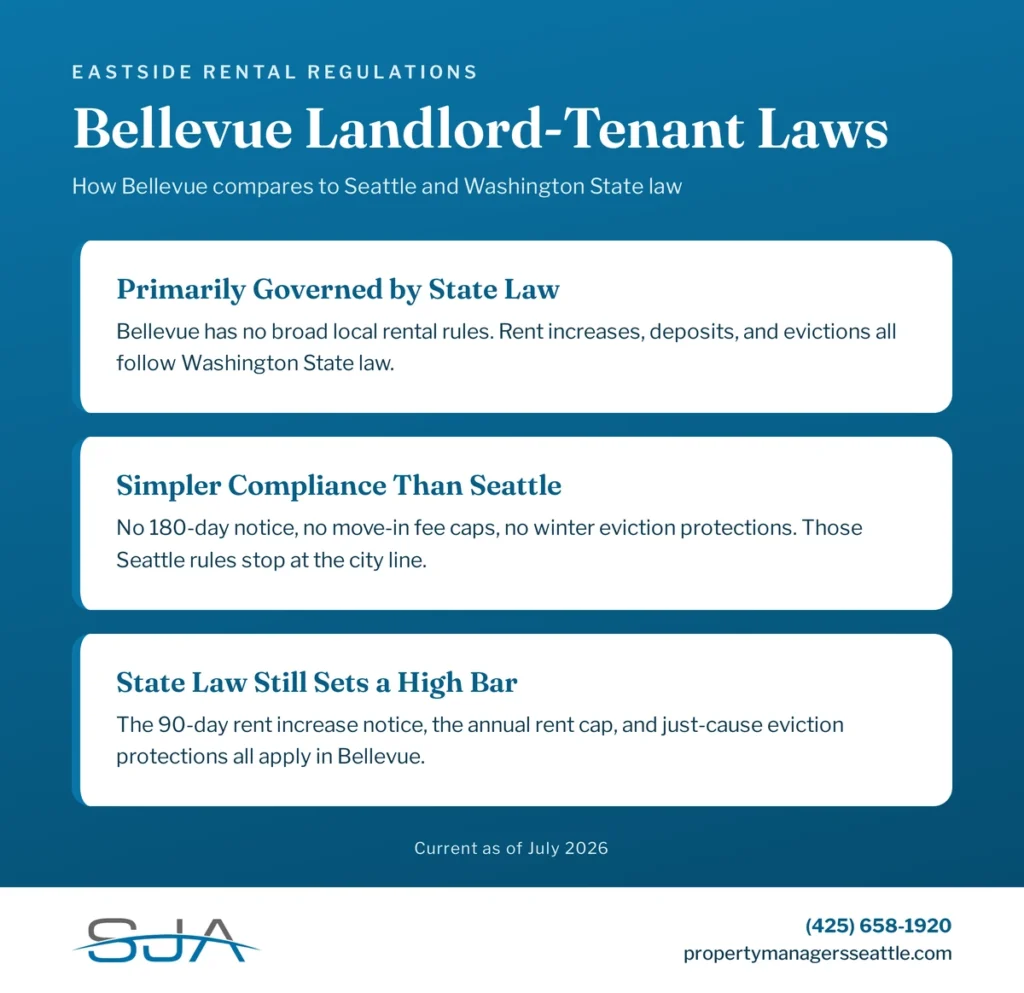
- Primarily Governed by State Law: Bellevue has not adopted the broad local rental rules found in Seattle. Rent increases, deposits, lease continuation, and evictions in Bellevue follow Washington State law. The city’s one notable local rule is a relocation assistance ordinance, Chapter 9.21 of the Bellevue City Code, which applies to low-income tenants displaced by demolition, substantial rehabilitation, or elimination of residential use.
- Simpler Compliance Than Seattle: Seattle landlords follow city requirements on top of state law, including a 180-day notice for rent increases, caps on move-in charges, and winter eviction protections for qualifying tenants. None of those apply in Bellevue.
- State Law Still Sets a High Bar: Following state law does not mean light regulation. The 90-day rent increase notice, the annual rent cap, and just-cause eviction protections all apply to Bellevue rentals.
Tips for Landlords to Stay Compliant
To avoid legal issues and maintain positive tenant relationships, Bellevue landlords should:
- Provide Proper Notices: Always give tenants a 90-day notice for rent increases, and follow the notice requirements in RCW 59.18.650 when ending or not renewing a tenancy.
- Be Transparent: Clearly outline all fees and deposit requirements in the lease agreement.
- Follow Fair Housing Laws: Avoid discriminatory practices and ensure tenant screening processes are consistent and fair.
- Stay Updated: Regularly check for updates to Bellevue’s rental regulations to ensure compliance.
Tips for Tenants to Know Their Rights
If you’re renting in Bellevue, here’s how to protect yourself:
- Review Your Lease: Carefully read your lease agreement to understand your rights and responsibilities.
- Know Your Rent Increase Rights: A rent increase requires 90 days of written notice and is capped for most rentals at 9.683% in 2026. An increase above the cap or on short notice is worth questioning.
- Report Discrimination: If you believe you’ve been discriminated against, contact the Washington State Human Rights Commission or a local tenant advocacy organization.
- Document Everything: Keep records of all communications with your landlord, especially regarding rent increases or lease renewals.
Bellevue’s tenant-landlord laws strike a balance between state regulations and local guidelines to promote fairness and housing stability. For landlords, understanding these rules is essential to avoid legal disputes and maintain positive tenant relationships. For tenants, knowing your rights ensures you’re protected from unfair practices and can advocate for yourself when necessary.
Whether you’re a landlord or a tenant, staying informed about Bellevue’s rental laws is the key to a successful and stress-free rental experience. If you have questions or need further assistance, consider consulting a legal expert or reaching out to local housing authorities.
Disclaimer:
Whether you’re a landlord or a tenant, staying informed is essential for a smooth and successful rental experience in Bellevue. We are not providing legal advice, and for specific legal questions or concerns, we recommend consulting an attorney or reaching out to local housing authorities for expert guidance.
Frequently Asked Questions
Does Bellevue have its own landlord-tenant laws?
Mostly no. Bellevue has not adopted the broad local rental regulations found in Seattle, so Washington State law governs rent increases, deposits, lease continuation, and evictions for Bellevue rentals. The city’s one notable local rule is a relocation assistance ordinance for low-income tenants displaced by demolition, substantial rehabilitation, or elimination of residential use.
How much notice is required for a rent increase in Bellevue?
Landlords must give 90 days of written notice before a rent increase under Washington State law. Most increases are also capped statewide at 9.683% for 2026, a limit that resets each year.
Do just-cause eviction rules apply in Bellevue?
Yes. Washington’s just-cause law, RCW 59.18.650, applies statewide, so Bellevue landlords need a cause listed in the statute to end most tenancies. Bellevue simply does not add extra local protections on top of state law the way Seattle does.
Is there a cap on security deposits in Bellevue?
No. Neither Bellevue nor Washington State caps security deposit amounts, unlike Seattle, which limits deposits to one month’s rent. State law still requires a written rental agreement with a signed move-in checklist to collect a deposit, and the deposit must be returned within 30 days after the tenancy ends.
How do Bellevue rental laws differ from Seattle's?
Seattle layers city requirements on top of state law, including a 180-day rent increase notice, move-in fee caps with installment plans, and winter eviction protections. None of those apply in Bellevue, where the state rules are the whole picture.