Converting a single-family home into a duplex is one of the most effective ways to increase rental income and make better use of an existing property. In Seattle, recent zoning changes have made these conversions more accessible, but the process still requires careful planning, design, and approval.
At SJA, we have over 16 years of experience working with property owners across Seattle to evaluate whether a home is a strong candidate for conversion, coordinate with design and construction teams, and manage duplex properties after completion. This guide outlines what to expect and where to focus your efforts before getting started.
What is a Duplex?
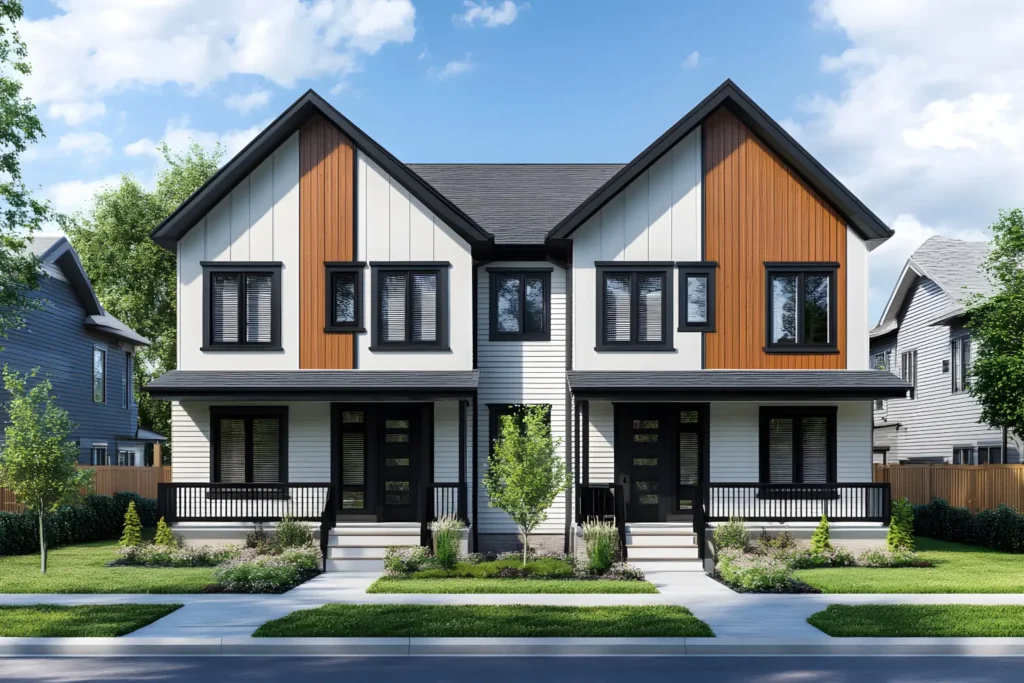
Although a duplex often looks like one house, it’s actually a multifamily home. A duplex is defined as a home on the same plot of land that houses more than one family in two units that are either separated by a wall or by a floor. This description might vary by city, and you’ll find that legal regulations for duplexes vary, too.
One of the major characteristics that makes a duplex different from other types of homes is ownership. Let’s compare:
- Property management companies usually own multiple units in a residential building, such as multifamily apartments. However, one person usually owns both units in a duplex.
- Condominium units, whether one or multiple, may be owned by multiple people, and the shared areas are also owned jointly. If you’re the owner of a duplex, you’ll have full ownership.
- Townhouses are also individually owned, but they differ from a duplex in that they often include two or more properties in a row, sharing one or more walls. A duplex has two units on the same plot of land and is owned by one person.
- Twin homes are also two units/properties divided by a wall, but they are on two separate plots of land.
Understanding the Rules for Duplex Conversions in Seattle
The hardest part is always getting started. For duplex conversions, that starts with understanding the different layers of zoning, building codes, and permitting requirements.
Generally, there are 4 key layers of regulations to get familiar with:
- Zoning: Can you build a duplex on your property?
- Development standards: Is your design feasible?
- Building code: What are the minimum requirements for a legal, individual unit?
- Permits: How do you get approval for your project?
Zoning determines whether a duplex is allowed at your property
Your first key step is to determine whether a duplex is allowed at your residence at all. Recent changes to Seattle policies indicate that duplexes are broadly allowed, but you should still double-check. Each zone, or location, is subject to specific requirements.
To begin, you can use Seattle’s Geographic Information Systems Map to find your property’s zoning designation. Then, you can use the King County Department of Assessments website to find all official records of your property involving previous ownership. To find all other records of your property, such as permit history and plans, visit the Seattle Services Portal.
To find any further regulations that apply to your zone, use:
Development standards determine how a duplex can be built at your property
Once you confirm that your zoning allows duplexes in your neighborhood, you must review development standards specific to your property. These rules define the physical limits of your home, including how tall the new duplex can be, how far it must be set back from property lines, how much of the lot it can cover, and how much total floor area is permitted.
In practice, these development standards define the boundaries of your project. Many duplexes that are technically allowed by zoning may become difficult or impractical once these limits are applied. This is more common on smaller or irregular property lots.
To find your specific zone’s development standards, you can use Seattle’s Geographic Information Systems Map. In your zone’s section, you can find the Land Use Code (SMC Title 23) describing setbacks, height, and lot coverage.
Building codes in Seattle determine the minimum requirements for duplex safety and habitability
Seattle Residential Code (SRC) states the requirements for each unit in your new duplex to function as an independent residence. These requirements will include that each unit have the following:
- Its own living space, kitchen, and bathroom
- Its own private entrance
- Safe egress
- adequate light, ventilation, and structural integrity
Seattle’s permit process ensures that your duplex conversion is approved
All duplex conversions must go through Seattle’s permitting process. This involves (1) submitting construction plans to the city for review, (2) receiving, responding to, and/or implementing corrections requested from the city, and (3) completing inspections throughout construction.
This permitting process is where zoning, development standards, and building code requirements all come together. You can find more resources and apply for your permits at the Seattle Services Portal and Seattle Department of Construction & Inspections.
Other regulations for duplex conversion in Seattle
Your property may be subject to additional regulations that could affect the feasibility of your project. The most common example is the Environmentally Critical Areas (ECA) Code. These regulations can limit where structures can be placed in properties near wetlands, steep slopes, or other protected areas.
4 Key Characteristics that Make a Home a Good Candidate for Duplex Conversion
There are a few key aspects of your home that might make it the perfect candidate for conversion into a duplex. Not sure if you hit the mark? In general, your home should have these 4 key characteristics to make it a good candidate for a duplex conversion in Seattle.
1. Non-negotiable: Meets zoning requirements
The first step in your duplex conversion project is to gather information about your property and neighborhood. Seattle’s local zoning laws may or may not allow duplex conversion in your neighborhood. Even if duplex conversion is allowed, there may be restrictions on building size limits and parking or safety requirements. See our section, “Zoning determines whether a duplex is allowed at your property” for more details.
2. Non-negotiable: Separate entrances and safe egress
Your home should have, or be able to accommodate, two separate entry points for your residents. If your home doesn’t already have more than one entry point, your engineer can help you determine whether adding a new access point is feasible. These can sometimes look like side-by-side entrances, front-and-side entrances for different floors, a split foyer with separate doors leading to each unit, or stacked entrances.
In any case, these separate entry points must also provide safe egress, or code-compliant ways, for residents to exit the unit in emergencies. Primary exits must provide a direct path to the outside, but emergency egress in other areas, such as the bedroom, must be available in case the main exit is blocked.
3. Enough space to create two residences up to code
Seattle law doesn’t specify any square footage requirements for duplex conversion. However, your home must be large enough to accommodate private bedrooms with suitable access to their own kitchen, bathroom, and living areas, with sufficient light and ventilation.
4. The right infrastructure
We recommend hiring a structural engineer to evaluate your home’s ability to support the modifications and remodeling you’ll need. Every home will require a layout rearrangement and changes to the plumbing and electrical systems. You’ll especially want to ensure that your home can handle changes to load-bearing walls and that each residence has its own electric, gas, and water meters.
Checklist to Convert Your Single-Family Home into a Duplex
Before getting started
- Confirm that your neighborhood or zoning allows duplex conversion
- Hire a contractor to confirm a few requirements, including:
- The property size is large enough to accommodate two units
- Each unit will have a separate and private entrance
- Safe egress for each unit
- Structural integrity of your home for these modifications
- Evaluate structural integrity and major systems
- Secure your financing and set your budget with qualified contractors
- Get your team together, including a licensed architect with duplex conversion experience
- Submit your site, floor, and structural plans to obtain your permits
During construction
- Structural modifications to your home’s layout to support two independent units
- Create separate entrances and egress points for each unit
- Install and upgrade utilities (plumbing lines, electrical systems, heating systems, etc.)
- Construct a separation between units that meet fire-resistance requirements and offer noise insulation
- Install kitchens and bathrooms in both units
- Stay up to date with our inspections at each stage
After construction is done
- Pass your zone’s final inspection and close permits with a sign-off from SDCI. This will allow the city to legally recognize your home as a new duplex.
- Establish unit addresses and separate utilities accounts and metering
- Organize your project documentation for future resale, refinancing, or insurance purposes
- If renting, purchase landlord insurance
- Confirm that each unit is fully functional and completely independent
How SJA Can Help You Convert Your Home into a Duplex
Converting your single-family home into a duplex is not just a construction project, but a long-term investment decision. Beyond feasibility, it is important to consider how the property will perform as a rental once you’re done building.
At SJA, we help property owners evaluate conversion opportunities, plan for long-term rental performance, and manage properties after completion. If you are considering a duplex conversion, we can help you determine whether your property is a strong candidate and what to expect throughout the process.
Additional Resources:
Frequently Asked Questions
Zoning, Legal, and Regulatory Questions
1. Is it legal to convert a single-family home into a duplex in Seattle?
Yes, in most cases. Recent updates to Seattle's zoning code have made duplex conversions broadly allowed in neighborhoods that were previously restricted to single-family use. However, "allowed" doesn't automatically mean "feasible." Your specific property must still comply with zoning rules, development standards (setbacks, height, lot coverage), and the Seattle Residential Code. Always confirm with the Seattle Department of Construction and Inspections (SDCI) before committing to a project.
2. How do I check my property's zoning designation?
Use Seattle's Geographic Information Systems (GIS) Map to look up your parcel. Once you have your zoning code (for example, NR1, NR2, NR3, or LR), you can cross-reference it with the Land Use Code (SMC Title 23) to review development standards specific to your zone.
3. What's the difference between a duplex, an ADU, and a townhouse?
A duplex has two units on a single lot under one ownership, typically separated by a common wall or floor. An Accessory Dwelling Unit (ADU) is a secondary, smaller unit added to a primary single-family home, either attached (AADU) or detached (DADU). A townhouse is individually owned and usually part of a row of multiple attached homes, with each unit on its own lot. The ownership structure, lot configuration, and permitting pathway differ significantly among the three.
4. Should I consider building an ADU instead of a full duplex conversion?
Sometimes, yes. An ADU is generally faster, less expensive, and easier to permit than a full duplex conversion, especially if your existing home's structure makes significant interior modifications complicated. A duplex conversion, though, often produces a more valuable and flexible rental asset because each unit is a true, independently recognized residence. The right choice depends on your property, budget, and long-term investment goals.
5. Can I convert a home in an Environmentally Critical Area (ECA)?
Possibly, but with additional restrictions. Properties near wetlands, steep slopes, landslide-prone areas, shorelines, or other protected zones are subject to Seattle's Environmentally Critical Areas Code, which may limit where and how you can build. ECA-restricted properties often require additional environmental reports and may face stricter permitting reviews.
6. Do I need to notify my neighbors before converting my property?
Seattle does not require neighbor consent for a duplex conversion in most cases, but certain permits or design reviews may require public notice. Even when not legally required, it's usually a good idea to communicate with immediate neighbors before starting construction to manage expectations and avoid complaints that could delay inspections.
Cost, Timeline, and Financing
7. How much does it cost to convert a single-family home into a duplex in Seattle?
Costs vary widely based on the home's existing condition, layout, and the scope of work. Property owners in Seattle commonly spend anywhere from $150,000 to well over $400,000 on a conversion when factoring in design fees, permits, structural work, separate utilities, kitchens, bathrooms, and finishing. Get itemized bids from multiple licensed contractors and build in a contingency of at least 15–20 percent for unexpected costs.
8. How long does a duplex conversion take from start to finish?
Plan for anywhere from 9 to 18 months total. This generally breaks down into 2 to 4 months for design and planning, 3 to 6 months for Seattle's permit review process, and 4 to 8 months for construction, depending on scope. Properties requiring structural changes, ECA review, or major utility upgrades tend to take longer.
9. How can I finance a duplex conversion?
Common options include a cash-out refinance of your existing property, a home equity line of credit (HELOC), a construction loan, or a renovation-specific loan product like a Fannie Mae HomeStyle or FHA 203(k). Because the completed property will be classified as a multifamily dwelling, some lenders will underwrite based on projected rental income, which can improve your borrowing power. Work with a lender experienced in small multifamily financing.
10. Will a duplex conversion pay for itself, and how quickly?
That depends on rental rates in your neighborhood, your construction budget, and your financing terms. Many Seattle-area owners see payback periods of 8 to 15 years when the conversion is well-planned and the property is managed professionally. Running a detailed pro forma with realistic rent assumptions, vacancy allowances, and maintenance reserves is essential before committing.
Design, Construction, and Building Code
11. Do both units need separate utilities and meters?
For most duplex conversions in Seattle, yes. Each unit should have its own electrical panel and, ideally, its own water, gas, and electric meters. Separate metering simplifies billing, allows you to charge tenants directly for their own utilities, and is often required or strongly encouraged by the city and by utility providers.
12. Do I need separate addresses for each unit?
Yes. Once your conversion is complete, you'll need to work with the city to establish distinct addresses, which is typically done as part of the final permitting and sign-off process. Separate addresses are also required for mail delivery, tenant leases, and utility accounts.
13. What are the parking requirements for a duplex in Seattle?
Parking requirements depend on your zoning designation and proximity to frequent transit service areas. In many Seattle neighborhoods with good transit access, parking requirements have been reduced or eliminated for residential conversions. Check the current Land Use Code for your specific zone, as requirements have changed in recent years.
14. Are there fire-resistance or soundproofing requirements between units?
Yes. The Seattle Residential Code requires a fire-rated separation between the two units, typically a wall or floor/ceiling assembly with a specific fire-resistance rating. While soundproofing isn't always legally required beyond what's achieved by fire assemblies, investing in additional sound insulation is highly recommended to reduce tenant disputes and improve long-term rental performance.
15. Can I add a second story to make the conversion work?
In many zones, yes, subject to height limits, setbacks, and structural feasibility. Adding a second story can be an effective way to create a clean stacked-duplex layout, but it significantly increases construction costs and often requires upgrading the foundation. A structural engineer should evaluate your home before you commit to this path.
16. Does my home need two separate entrances, and what does "safe egress" mean?
Yes, each unit must have its own private entrance. Safe egress means each unit must have code-compliant ways to exit in an emergency. The primary exit must lead directly outside, and secondary emergency exits (such as bedroom windows meeting minimum size and sill height requirements) must be available in case the main exit is blocked.
Rental Operations, Taxes, and Insurance
17. Can I live in one unit and rent out the other?
Yes, and this is a popular approach called "house hacking." Living on-site can simplify management, reduce your housing costs, and in some cases help you qualify for owner-occupant financing with better loan terms. Keep in mind that you'll still be subject to Washington's and Seattle's landlord-tenant laws for the rented unit.
18. Will converting to a duplex increase my property taxes?
Most likely, yes. King County reassesses property value after significant improvements, and converting from a single-family home to a duplex typically raises the assessed value. Budget for a higher annual property tax bill once the conversion is recognized. The increased rental income usually more than offsets the higher taxes, but it's important to model this accurately.
19. Do I need different insurance after converting to a duplex?
Yes. A standard homeowner's policy won't cover a rental duplex. You'll need a landlord insurance policy (often called a dwelling fire or DP-3 policy) that covers the structure, liability, and loss of rental income. If you live in one unit, you'll likely need a hybrid policy that covers both your personal occupancy and the rental use. Talk to an insurance broker experienced with small multifamily properties.
20. Are duplexes subject to Seattle's rental regulations and landlord-tenant laws?
Yes. Duplexes are fully subject to Seattle's and Washington's landlord-tenant laws, including the Rental Registration and Inspection Ordinance (RRIO), just-cause eviction rules, security deposit limits, notice requirements, and rent increase restrictions. Staying current with Seattle and Washington state rental law updates is essential, especially given recent legislative changes.
21. Can I convert my home while tenants are still living in it?
In most cases, no, or at least not without relocating them. Major construction involving structural changes, utility work, and reconfigured layouts is not compatible with continued occupancy. You'll need to coordinate lease end dates or provide proper notice and relocation assistance as required by Seattle's Tenant Relocation Assistance Ordinance (TRAO) if applicable.
22. How much more rent can I collect from a duplex compared to a single-family home?
In most Seattle neighborhoods, two well-designed rental units produce 30–70 percent more gross rental income than a single single-family rental on the same property, depending on layout, unit sizes, and local rental rates. Running a rental analysis using comparable duplex units in your specific neighborhood will give you the most reliable estimate.
23. Will a duplex be harder to sell than a single-family home?
Not necessarily. A legally permitted duplex appeals to a different but active buyer pool: investors, house hackers, and multi-generational families. While the single-family buyer pool is larger, duplexes often command stronger price-per-square-foot valuations based on income potential. Proper documentation of permits, sign-offs, and rental history makes the property much easier to sell.
Working with Professionals
24. Do I need an architect, engineer, or general contractor?
For a project of this scope, yes to all three. A licensed architect with duplex experience will design a code-compliant layout and prepare plans for permit submission. A structural engineer will assess load-bearing walls, the foundation, and any additions. A licensed general contractor will manage construction, subcontractors, and inspections. Working with professionals who have specific experience with Seattle duplex conversions can save significant time and cost.
25. Should I hire a property manager for my duplex once it's complete?
Managing two units means twice the leases, tenants, maintenance calls, and compliance requirements, often with tighter margins than a larger multifamily building. A professional property manager can handle tenant screening, rent collection, maintenance coordination, and regulatory compliance, which is especially valuable in Seattle's constantly evolving regulatory environment. If you're a long-distance owner, managing around a full-time job, or simply new to landlording, hiring a property manager often pays for itself in reduced vacancy, fewer costly mistakes, and better tenant retention.
26. How can SJA Property Management help me with a duplex conversion?
SJA helps property owners evaluate whether their home is a strong candidate for conversion, connect with experienced design and construction partners, project the property's long-term rental performance, and manage the finished duplex once it's complete. Reach out for a property-specific consultation before you commit to a project.