Property maintenance and repairs are some of the most important aspects of managing a rental property. For landlords, keeping a property well-maintained ensures tenant satisfaction, preserves property value, and prevents costly future repairs. On the other hand, neglecting maintenance can lead to tenant disputes, legal issues, and significant financial losses. Understanding your responsibilities, planning ahead, and having a proactive maintenance strategy can make all the difference in running a successful rental business.
In this guide, we’ll dive into the key aspects of property maintenance and repairs, including legal obligations, preventive maintenance, handling emergency repairs, and best practices for keeping your rental property in top condition.
Key Takeaways
- Washington sets firm repair deadlines under RCW 59.18.070: work must begin within 24 hours for loss of essential services or hazardous conditions, 72 hours for major appliances and plumbing fixtures, and 10 days for everything else.
- Preventive maintenance on a seasonal schedule costs far less than reactive repairs and extends the life of major systems.
- Tenants carry real responsibilities too, including cleanliness, prompt reporting, and replacing consumables, and the lease should make those expectations explicit.
- Budget at least 1% of the property’s value annually for maintenance, with a separate reserve for emergencies.
- Missing legal deadlines has consequences: tenants can repair and deduct, and in serious cases break the lease.
Legal Responsibilities for Landlords
In most jurisdictions, landlords are legally required to maintain rental properties in a safe and habitable condition. Failing to do so can lead to code enforcement penalties, tenant remedies like repair-and-deduct, and in serious cases the tenant’s right to break the lease.. Here are some key legal responsibilities that landlords must adhere to:
- Habitability Standards: Landlords must provide tenants with a livable home that meets local housing codes. This includes ensuring proper heating, plumbing, and structural integrity.
- Repairs and Maintenance: Landlords are responsible for fixing issues that affect the property’s habitability, such as broken heating systems, leaking roofs, or faulty electrical wiring.
- Timely Response to Repairs: Washington sets specific deadlines under RCW 59.18.070. Landlords must begin repairs within 24 hours when a tenant loses hot or cold water, heat, or electricity, or faces a hazardous condition, within 72 hours for a broken refrigerator, range and oven, or major plumbing fixture, and within 10 days for all other repairs.
- Compliance with Health and Safety Codes: Rental properties must comply with fire safety regulations, building codes, and pest control measures to ensure tenant safety.
- Mold and Pest Control: Landlords must address mold issues and pest infestations promptly to avoid health hazards for tenants.
Understanding these legal obligations can help landlords stay compliant and avoid costly disputes with tenants.
Preventive Maintenance: Staying Ahead of Repairs
Preventive maintenance is key to reducing long-term repair costs and ensuring that rental properties remain in good condition. Landlords should establish a routine maintenance schedule that includes:
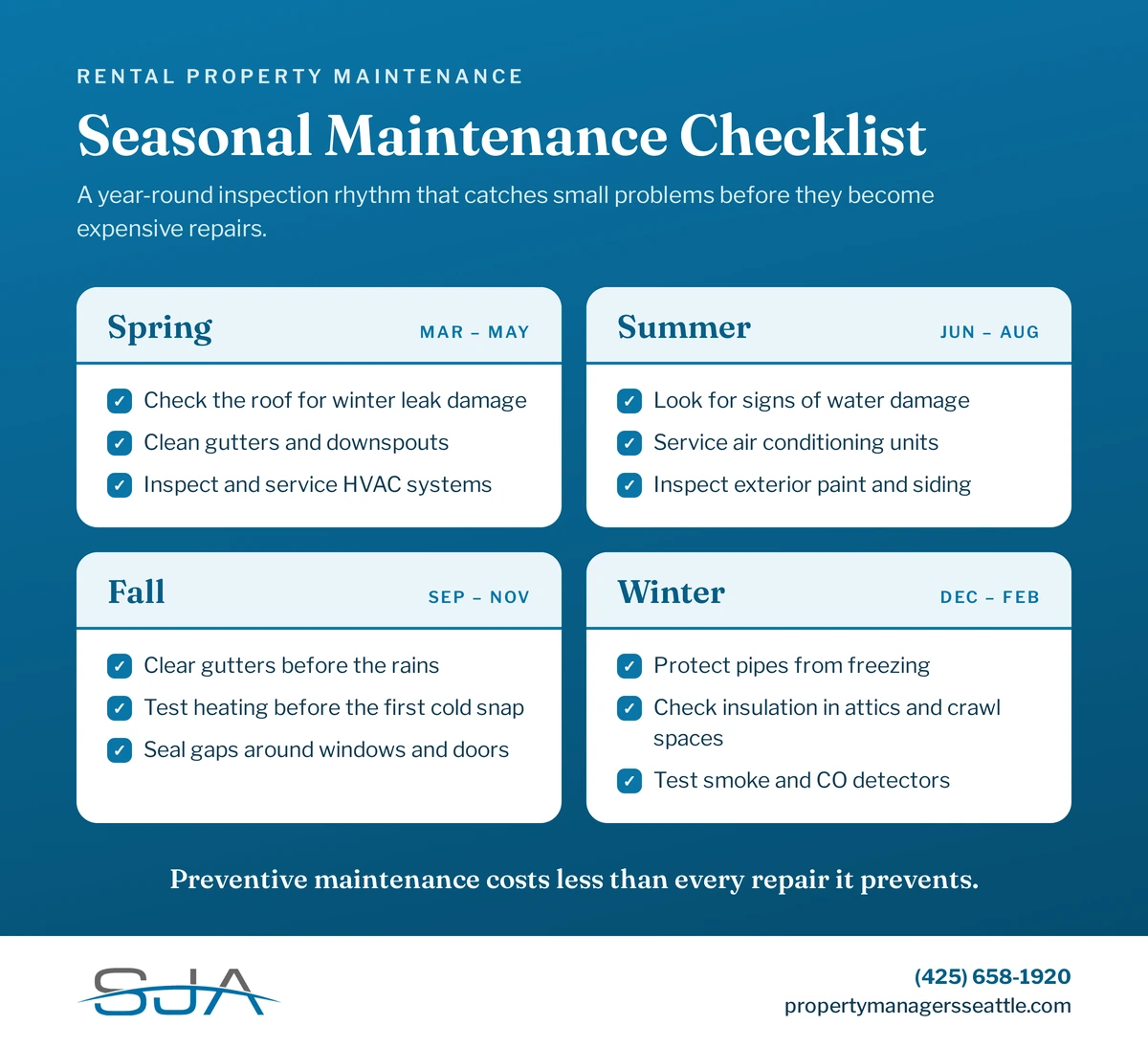
1. Seasonal Inspections: Regular inspections can help identify minor issues before they turn into costly repairs. For example:
- Spring: Check for roof leaks, clean gutters, and inspect HVAC systems.
- Summer: Look for signs of water damage, service air conditioning units, and inspect exterior paint.
- Fall: Clean gutters, check heating systems, and ensure windows and doors are sealed.
- Winter: Prevent frozen pipes, inspect insulation, and test smoke detectors.
2. Plumbing and Water Systems: Regularly check for leaks, dripping faucets, and water pressure issues. Addressing plumbing problems early can prevent major water damage.
3. HVAC System Maintenance: Schedule annual maintenance for heating and cooling systems to improve efficiency and prevent breakdowns.
4. Electrical Safety Checks: Inspect wiring, circuit breakers, and electrical outlets to prevent fire hazards.
5. Pest Prevention: Implement pest control measures, such as sealing entry points and scheduling exterminations if needed.
By taking a proactive approach, landlords can extend the lifespan of property components and avoid major financial setbacks.
Handling Emergency Repairs
Despite careful maintenance, emergency repairs can still arise. Landlords should be prepared to handle urgent repair requests efficiently, and our guide to Washington emergency repair response times covers the legal deadlines in detail. Common emergency repairs include:
- Burst Pipes or Flooding: Immediate action is required to prevent water damage. Shutting off the main water supply and contacting a plumber should be the first steps.
- No Heating or Cooling: In extreme weather conditions, landlords must address heating or air conditioning failures quickly.
- Gas Leaks: If a tenant reports a gas leak, landlords must advise them to evacuate immediately and contact the gas company.
- Electrical Issues: Power outages, sparking outlets, or faulty wiring should be addressed by a licensed electrician as soon as possible.
- Broken Locks or Security Issues: If a tenant is unable to secure the property due to a broken lock or damaged door, landlords must take immediate action to fix the problem.
To streamline the repair process, landlords should:
- Maintain a list of trusted contractors and emergency repair services.
- Have an emergency contact protocol in place for tenants.
- Respond to tenant repair requests promptly to prevent further damage.
Tenant Responsibilities in Maintenance
While landlords are responsible for major repairs and maintenance, tenants also have obligations to keep the rental property in good condition. These responsibilities typically include:
- Keeping the Property Clean: Tenants should maintain cleanliness to prevent pest infestations and mold growth.
- Reporting Maintenance Issues Promptly: Tenants must notify landlords of leaks, broken appliances, or other damage before the issue worsens.
- Properly Using Appliances and Fixtures: Tenants should use sinks, toilets, and appliances correctly to avoid damage.
- Replacing Consumables: Tenants are usually responsible for replacing light bulbs, air filters, and smoke detector batteries.
- Preventing Damage: Tenants should avoid causing unnecessary wear and tear, such as staining carpets or damaging walls.
Clarifying these expectations in the lease agreement can prevent disputes and ensure a cooperative landlord-tenant relationship.
Budgeting for Repairs and Maintenance
Landlords should allocate a portion of rental income toward maintenance and repairs. A general rule of thumb is:
- 1% Rule: Set aside at least 1% of the property’s value annually for maintenance costs.
- 50% Rule: Budget for expenses by setting aside 50% of the rental income to cover taxes, insurance, maintenance, and repairs.
- Emergency Fund: Keep a separate fund for unexpected repairs, such as roof leaks or HVAC failures.
Having a well-planned budget ensures that landlords can afford necessary repairs without financial strain.
Hiring a Property Management Company for Maintenance
For landlords who don’t have the time or expertise to handle repairs, hiring a property management company can be a smart solution. A professional property manager can:
- Schedule and oversee repairs
- Handle tenant maintenance requests
- Ensure compliance with legal maintenance obligations
- Work with trusted contractors to get the best service and pricing
By delegating maintenance tasks to a professional team, landlords can reduce stress and ensure their properties are well cared for.
Maintenance and repairs are an essential part of property management. By understanding legal obligations, implementing preventive maintenance, and budgeting appropriately, landlords can protect their investments and provide a better living experience for tenants. A well-maintained property attracts high-quality tenants, reduces turnover rates, and maintains property value in the long run.
For landlords looking for a hassle-free maintenance solution, partnering with an experienced property management company can be a game-changer. With professional expertise and dedicated service, landlords can ensure their properties remain in top shape while maximizing rental income.
If you’re looking for expert property management services to handle maintenance, repairs, and tenant requests efficiently, contact SJA Property Management today!
DISCLAIMER:
Whether you’re a landlord or a tenant, staying informed is essential for a smooth and successful rental experience in Seattle. We are not providing legal advice, and for specific legal questions or concerns, we recommend consulting an attorney or reaching out to local housing authorities for expert guidance. Updated July 2026.
Frequently Asked Questions
How quickly does a landlord have to make repairs in Washington?
Washington sets three deadlines under RCW 59.18.070. Repairs must begin within 24 hours when a tenant loses hot or cold water, heat, or electricity, or faces a hazardous condition, within 72 hours for a broken refrigerator, range and oven, or major plumbing fixture, and within 10 days for all other repairs. The clock starts when the tenant gives written notice.
What maintenance is a tenant responsible for in a rental?
Tenants are generally responsible for keeping the unit clean, using appliances and fixtures properly, replacing consumables like light bulbs and smoke detector batteries, reporting problems promptly, and avoiding damage beyond normal wear and tear. The lease should spell out these expectations so both sides know where the line sits.
What counts as an emergency repair in a rental property?
Emergencies are conditions that threaten health, safety, or the property itself: burst pipes or flooding, loss of heat in cold weather, gas leaks, electrical hazards, and broken locks or doors that leave the home unsecured. These call for immediate action, while routine repairs follow the standard legal timelines.
How much should a landlord budget for rental property maintenance?
A common benchmark is setting aside at least 1% of the property’s value each year, with a separate emergency fund for large unplanned repairs like roof leaks or HVAC failures. The 50% rule offers a broader check: roughly half of rental income typically goes to operating expenses including taxes, insurance, and upkeep.
Can a tenant make repairs and deduct the cost from rent in Washington?
Yes, within limits. When a landlord misses the legal repair deadlines after proper written notice, Washington law allows tenants to have the work done and deduct the cost from rent, subject to caps and procedural requirements. Landlords who respond within the required timelines avoid the issue entirely.