
Seattle has earned a reputation for its forward-thinking approach to tenant protections, standing out as one of the most renter-friendly cities in Washington State. While Washington has its own set of landlord-tenant laws, Seattle has gone a step further by introducing additional regulations aimed at promoting fair housing practices and safeguarding renters from unfair treatment.
Whether you’re a landlord trying to stay on top of your responsibilities or a tenant looking to understand your rights, this guide will walk you through Seattle’s key rental laws. We’ll cover everything from notice requirements and eviction rules to the protections in place for tenants. Ready to get started? Let’s dive in!
Key Takeaways
- Seattle requires at least 180 days written notice before any rent increase, regardless of amount, compared to the 90-day state requirement under HB 1217.
- Rent increases are capped statewide under HB 1217 at the lesser of 7% plus CPI or 10%, with a 2026 maximum of 9.683%, and no increase is allowed during the first 12 months of a tenancy.
- A rent or housing cost increase of 10% or more within a 12-month period can trigger Economic Displacement Relocation Assistance, paying eligible tenants three times the current monthly housing cost.
- The Just Cause Eviction Ordinance requires a legally valid reason to end a tenancy, and all rental units must be registered under the Rental Registration and Inspection Ordinance.
- A security deposit and nonrefundable move-in fees combined cannot exceed one month’s rent, with installment payment options set by lease length.
- A low- to moderate-income tenant generally cannot be evicted for nonpayment of rent between December 1 and March 1 when the owner owns four or more housing units.
Key Landlord Obligations in Seattle
Seattle’s rental laws place specific responsibilities on landlords to ensure fair treatment of tenants. Here are the most important obligations:
Notice for Rent Increases
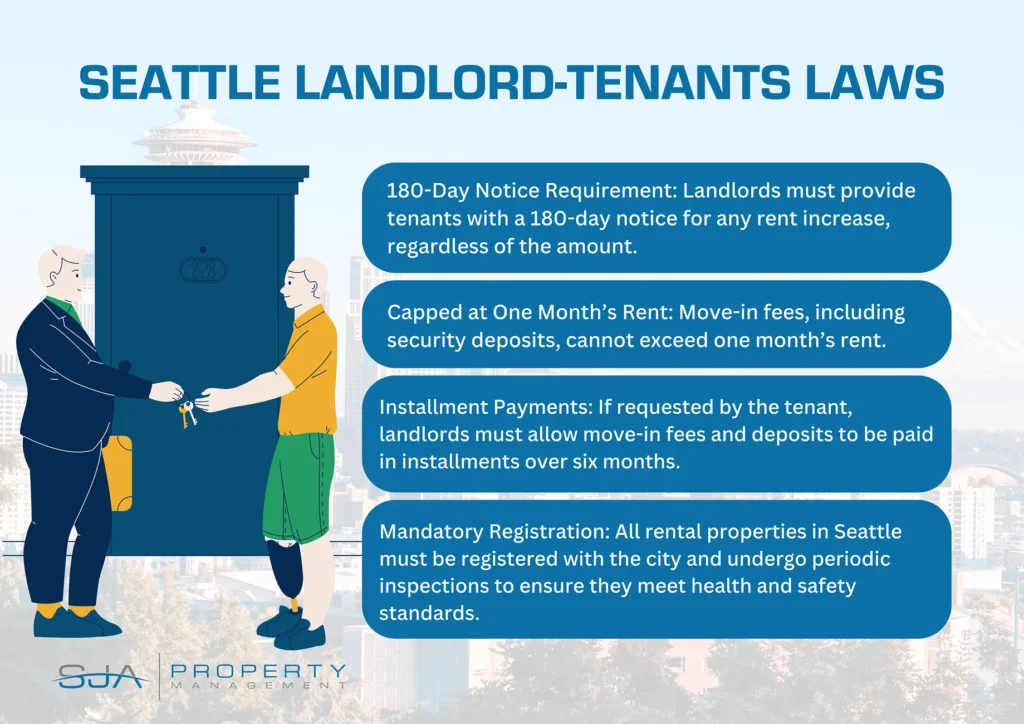
- 180-Day Notice Requirement: Landlords must provide tenants with a 180-day notice for any rent increase, regardless of the amount. This is significantly longer than the state requirement of 90 days and gives tenants ample time to adjust their budgets or make alternative housing arrangements.
- Statewide Rent Cap: Washington’s HB 1217 caps annual rent increases at the lesser of 7% plus CPI or 10%, with a 2026 maximum of 9.683%. No increase is permitted during the first 12 months of a tenancy. This cap applies in Seattle alongside the city’s 180-day notice requirement.
Move-in Fees and Security Deposits
- Capped at One Month’s Rent: A security deposit and nonrefundable move-in fees combined cannot exceed one month’s rent. Nonrefundable fees cover only cleaning and screening and cannot exceed 10% of one month’s rent. A pet deposit of up to 25% of one month’s rent and last month’s rent may be charged in addition.
- Installment Payments: Tenants may choose to pay these costs in installments, with the schedule set by lease length. For leases of six months or longer, the deposit, move-in fees, and last month’s rent may each be paid in six equal monthly installments, and shorter terms use fewer. Landlords cannot charge interest or refuse to rent to a tenant who pays in installments.
Just Cause Eviction Ordinance
- Valid Reasons Required: Landlords cannot evict tenants without a legally valid reason, such as:
- Non-payment of rent.
- Lease violations.
- Owner move-in or family occupancy.
- Substantial renovations or demolition of the property.
- No Retaliatory Evictions: Landlords cannot evict tenants in retaliation for exercising their rights, such as reporting housing code violations.
Rental Registration & Inspection Ordinance (RRIO)
- Mandatory Registration: All rental properties in Seattle must be registered with the city and undergo periodic inspections to ensure they meet health and safety standards.
- Compliance Required: Landlords must address any violations identified during inspections to maintain their rental license.
Tenant Protections in Seattle
Seattle’s tenant protections go above and beyond state laws to ensure renters are treated fairly and have access to safe, affordable housing. Here are the key protections:
Winter Eviction Ban
- December 1 to March 1: During these winter months, a low- to moderate-income tenant generally cannot be evicted for non-payment of rent. This protection applies when the owner owns four or more housing units.
- Purpose: This ban helps protect vulnerable tenants from homelessness during the coldest and wettest months of the year.
First-in-Time Ordinance
- First Qualified Applicant: Landlords must offer rental units to the first qualified applicant who meets the screening criteria.
- Prevents Discrimination: This rule helps prevent landlords from cherry-picking tenants based on personal preferences or biases.
Relocation Assistance
- Rent Increases of 10% or More: If a landlord increases housing costs by 10% or more within a 12-month period, an income-eligible tenant who chooses to move may apply for Economic Displacement Relocation Assistance (EDRA).
- Amount: EDRA pays three times the current monthly housing cost. The City advances the payment to eligible tenant households earning 80% or less of area median income, and the landlord reimburses the City.
How Seattle’s Laws Differ from State Laws
While Washington State has its own landlord-tenant laws, Seattle’s regulations are more stringent in several areas:
- Notice for Rent Increases: State law requires 90 days’ notice, but Seattle requires 180 days.
- Eviction Protections: State law allows no-cause evictions in some cases, but Seattle’s Just Cause Eviction Ordinance eliminates this option.
- Relocation Assistance: Seattle mandates financial assistance for tenants displaced by large rent increases, which is not required under state law.
Tips for Landlords to Stay Compliant
Navigating Seattle’s tenant-friendly laws can be challenging, but here are some tips to help landlords stay compliant:
- Stay Informed: Regularly check the Seattle Department of Construction and Inspections (SDCI) website for updates on rental laws.
- Document Everything: Keep detailed records of all communications, rent increases, and maintenance requests.
- Screen Tenants Fairly: Follow the First-in-Time Ordinance and avoid discriminatory practices.
- Plan Ahead: Account for the 180-day notice requirement when considering rent increases.
Tips for Tenants to Know Their Rights
If you’re a tenant in Seattle, here’s how to protect yourself:
- Read Your Lease: Understand the terms of your rental agreement, including rent increases and move-out procedures.
- Request Installments: If you can’t afford the full move-in costs upfront, ask your landlord to allow installment payments.
- Report Violations: If your landlord fails to maintain the property or violates your rights, contact the SDCI or a tenant advocacy organization.
- Know Your Eviction Rights: Familiarize yourself with the Just Cause Eviction Ordinance and the Winter Eviction Ban.
Seattle’s tenant-landlord laws are designed to create a fair and balanced rental market, but they can be complex to navigate. For landlords, understanding and complying with these regulations is essential to avoid legal disputes and maintain positive tenant relationships. For tenants, knowing your rights ensures you’re protected from unfair practices and can advocate for yourself when necessary.
Whether you’re a landlord or a tenant, staying informed is the key to a successful rental experience in Seattle. If you have questions or need further assistance, consider consulting a legal expert or reaching out to local housing authorities.
Frequently Asked Questions
How much notice does a landlord have to give before raising rent in Seattle?
Seattle requires at least 180 days written notice before any rent increase, regardless of the amount. That is one of the longest notice periods in the country and is significantly longer than the Washington state requirement of 90 days under HB 1217. The notice must include the city-required language about tenant rights, or it cannot be enforced.
Is there a limit on how much rent can be increased in Seattle?
Yes. Washington’s HB 1217 caps annual rent increases at the lesser of 7 percent plus CPI or 10 percent, with a 2026 maximum of 9.683 percent. No increase is permitted during the first 12 months of a tenancy. This statewide cap applies in Seattle alongside the city’s 180-day notice requirement.
What is Economic Displacement Relocation Assistance (EDRA)?
EDRA applies when a landlord increases housing costs by 10 percent or more within a 12-month period. A tenant household earning 80 percent or less of area median income that chooses to move may apply for assistance equal to three times the current monthly housing cost. The City advances the payment, and the landlord reimburses the City.
Can a landlord evict a tenant in Seattle without a reason?
No. Seattle’s Just Cause Eviction Ordinance requires a legally valid reason to end a tenancy, such as nonpayment of rent, a lease violation, owner or family move-in, or substantial renovation. Retaliatory evictions, such as removing a tenant for reporting code violations, are prohibited.
How much can a landlord charge for move-in costs in Seattle?
A security deposit and nonrefundable move-in fees combined cannot exceed one month’s rent. Nonrefundable fees cover only cleaning and screening and cannot exceed 10 percent of one month’s rent. A pet deposit of up to 25 percent of one month’s rent and last month’s rent may be charged in addition. Tenants can pay these costs in installments, with six equal monthly installments available on leases of six months or longer.
Can a tenant be evicted during the winter in Seattle?
A low- to moderate-income tenant generally cannot be evicted for nonpayment of rent between December 1 and March 1 when the owner owns four or more housing units. The protection is intended to prevent displacement during the coldest months of the year.
Disclaimer:
Whether you’re a landlord or a tenant, staying informed is essential for a smooth and successful rental experience in Seattle. We are not providing legal advice, and for specific legal questions or concerns, we recommend consulting an attorney or reaching out to local housing authorities for expert guidance.