
As a new landlord, you have to decide on which type of rentals you want to offer, and of course, which types of rental agreements you need. While any real estate lawyer or Bothell property management company can help you with this, it’s best to go into anything well informed.
Types of Rental Agreements in Washington
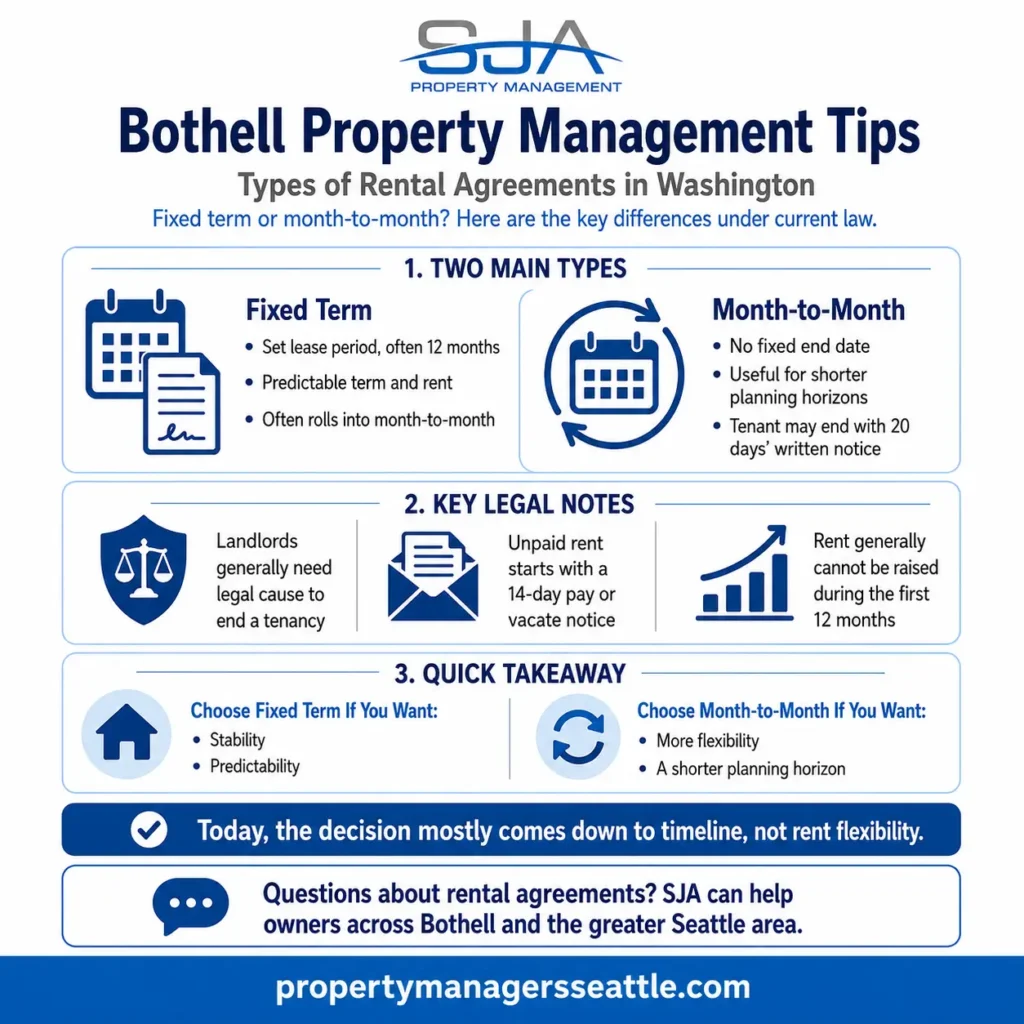
Washington residential rentals use two main types of rental agreements: fixed term and periodic. Here is how each works, along with a few arrangements you may hear about that are not true rental agreements.
Fixed Term
A fixed term lease gives the tenant the unit for a set period at a set rent. For residential rentals, 12 months is the standard, though 6-month and 18-month terms are also common. The main benefit for landlords is predictability. You know how long the tenancy runs, and the rent is locked in for the term. Tenants get the same certainty in return, which is why fixed term leases are the default choice for most single-family and long-term rentals.
Unless the lease says otherwise, a fixed term lease typically converts to a month-to-month tenancy when the term ends. Neither side can simply walk away mid-term, but there are legal exceptions. Tenants have statutory early termination rights in certain situations, such as for survivors of domestic violence, and landlords can end a lease early for specific causes like waste or nuisance. Ending or not renewing a tenancy also generally requires a legal cause under Washington law, so plan lease endings carefully and get advice before serving any notice.
Periodic
A periodic tenancy runs period to period with no set end date, and month-to-month is by far the most common form. Many month-to-month tenancies begin as fixed term leases that rolled over when the term ended. Others are set up that way from the start, which can suit owners who may want to sell, renovate, or move back in on a shorter timeline.
The notice rules are not symmetrical. A month-to-month tenant can end the tenancy with written notice at least 20 days before the end of a rental period. A landlord, however, needs a legal cause to end any tenancy, and each cause carries its own notice period. If rent goes unpaid, the required first step is a 14-day pay or vacate notice, and only after that can an eviction case be filed. Our Washington eviction process guide covers the causes, notices, and timelines in detail.
Other Arrangements You May Hear About
You may also see the term at-will tenancy. Under older common law, it meant either side could end the arrangement at any time. That framing no longer fits Washington residential rentals, because landlords now need a legal cause to end any tenancy. What remains of at-will is a narrow edge case, such as someone living in a property with permission but without rent or a defined term.
Two other situations often get confused with rental agreement types. A tenant who stays past the end of a lease without permission is a holdover, not a new kind of agreement, and our squatter rights guide explains how Washington handles unauthorized occupants. Short-term stays, such as vacation rentals booked for fewer than 30 nights, are generally treated as transient lodging rather than tenancies and operate under different rules.
Put every rental agreement in writing and have it signed before handing over the keys. A verbal month-to-month arrangement can be legally valid in Washington, but a written agreement is what protects both sides when a dispute comes up. Under Washington’s statute of frauds, a lease longer than one year must also be in writing and notarized to be enforceable. A real estate attorney or a professional Bothell property manager can draw the agreement up for you and keep it current as the laws change.
Which Type Should You Choose?
The choice matters less than it used to. Landlords once favored month-to-month agreements for the freedom to adjust rent quickly, but Washington now applies the same rent increase cap and the same 90-day notice requirement to every tenancy type, and rent cannot be raised at all during the first 12 months. Our Washington rent increase rules guide explains the current limits. With rent flexibility mostly equalized, the real decision comes down to timeline: a fixed term lease fits owners who want a stable, predictable tenancy, while month-to-month fits owners who may need the property back on shorter notice, provided a legal cause applies.
Questions about rental agreements or any other part of managing your property? Reach out to the SJA team for a free consultation. We handle leases, tenants, and compliance for owners across Bothell and the greater Seattle area.