Owning a multi-family rental in Seattle can be one of the smartest investments you make. However, managing it yourself is a different story. Between Washington’s strict rent cap, Seattle’s complex eviction rules, and the daily demands of multiple tenants, many owners quickly realize they need help. At SJA Property Management, we have spent 17 years managing single-family and multi-family rentals across the greater Seattle area. With $500 million+ in real estate assets under management, a 40-person team of property experts, and proven systems for both single-family and multi-family rentals, we know exactly what good management should look like. This checklist walks you through everything a quality Seattle multi-family property management company should do for you, so you can compare what you are getting (or what you would get) before signing on the dotted line.
In Seattle Multi-Family Property Management Is Different
First, let’s set the stage. A duplex, triplex, fourplex, or small apartment building is not just a single-family home with extra units. It comes with more tenants, more turnover, more maintenance, and far more legal complexity.
Seattle and Washington State have some of the strictest landlord-tenant laws in the country. Just a few examples:
- A statewide 9.683% rent cap for 2026 under HB 1217
- Seattle’s just-cause eviction ordinance, one of the toughest in the nation
- The Rental Registration and Inspection Ordinance (RRIO), which requires every rental property to be registered and inspected
- Strict rules on move-in fees, security deposits, and notice periods
A property manager who works mostly with single-family homes can easily miss these multi-family-specific demands. That is why SJA offers dedicated multi-family property management services built around the unique needs of small apartment owners. For more on the topic, we also recommend reading what to look for in a King County multi-family property manager.
The Full Seattle Multi-Family Property Management Checklist
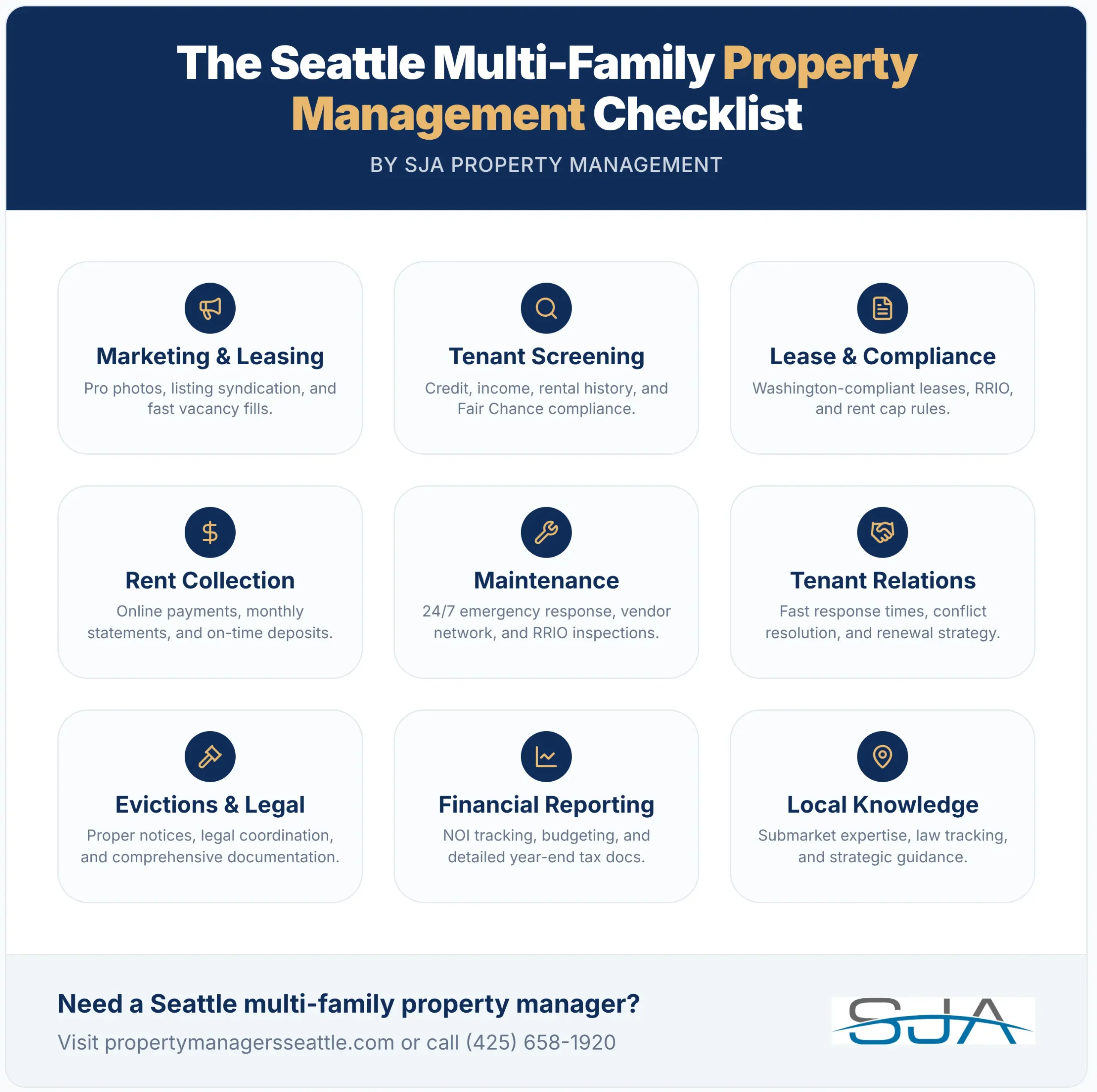
Here is what a great property management company should handle for you. Use it as a checklist when comparing options or reviewing your current manager.
1. Marketing and Leasing Your Units
A vacant unit costs you money every single day. Therefore, marketing matters more than most owners realize.
A good Seattle multi-family property manager should:
- Take professional photos of every unit
- Write clear, keyword-rich listings
- Syndicate to all major rental sites (Zillow, Apartments.com, Trulia, Realtor.com)
- Price each unit type correctly (studios, one-bed, two-bed)
- Run digital ads when needed to fill harder-to-rent units
- Coordinate showings across multiple vacant units at once
- Track and reduce average days-on-market
In our experience managing buildings across Seattle’s Capitol Hill, Ballard, and Northgate neighborhoods, plus Bellevue and Redmond, the best results come from blending fast online marketing with hands-on local showings. As a result, our clients see less downtime between tenants.
2. Tenant Screening Done Right
Next, screening. One bad tenant can affect every neighbor in your building, so this step is critical.
Your manager should:
- Follow Seattle's Fair Chance Housing Ordinance rules
- Apply Seattle's first-in-time rule (process applications in the order received)
- Check credit, income, employment, and rental history
- Verify identity and run background checks
- Use the same standards for every applicant (fair housing compliance)
- Document each decision in writing
For background on Seattle’s fair housing rules, you can review the Seattle Office for Civil Rights’ housing page.
3. Lease Agreements and Legal Compliance
Multi-family leases are not one-size-fits-all. Each unit may have different start dates, rent levels, and lease terms.
Your property manager should:
- Use Washington-compliant lease forms
- Add all required disclosures (mold, lead-based paint, fire safety, RRIO)
- Cap move-in fees and security deposits per state and city law
- Track each lease's start, end, and renewal dates
- Provide proper written notice for any rent change
- Stay current on Washington's 2026 rent cap of 9.683%
The full text of the Washington Residential Landlord-Tenant Act (RCW 59.18) is also a great reference for owners who want to know the rules themselves.
4. Rent Collection and Financial Reporting
Cash flow keeps your investment alive. Your manager should make rent collection painless and reporting clear.
Look for:
- Online rent payment options for tenants
- Automatic late fee enforcement (within Seattle's legal limits)
- Direct deposit of owner funds by a set day each month
- Monthly owner statements you can read in 60 seconds
- Year-end tax-ready reports
- Trust accounting that separates owner funds from company funds
- Detailed records for every transaction
At SJA, 98% of our tenants pay on time and rent is deposited into owner accounts by the 15th of each month. Therefore, our owners always know what to expect.
5. Maintenance and Building Operations
Multi-family buildings have shared systems: roofs, hallways, parking, laundry, and sometimes elevators. So maintenance is more complex than in a single-family home.
A strong manager should:
- Offer 24/7 emergency maintenance response
- Have vetted vendor relationships (plumbers, electricians, HVAC, roofers)
- Coordinate RRIO inspections every 5 to 10 years
- Keep common areas clean and safe
- Run preventative maintenance schedules
- Handle quick turn-arounds between tenants
- Track all repairs in writing
Vendor pricing matters too. A team that manages many properties usually gets better rates than a single owner can. Those savings flow back to you.
6. Tenant Relations and Retention
Turnover is expensive. Every move-out means cleaning, repairs, marketing, and lost rent. So keeping good tenants is just as important as finding them.
Your manager should:
- Offer a clear way for tenants to communicate (portal, phone, email)
- Resolve conflicts between neighbors quickly
- Send timely renewal offers
- Keep response times short (24 business hours or less)
- Build positive long-term relationships
7. Handling Evictions and Just-Cause Compliance
Evictions in Seattle are not simple. The city’s just-cause ordinance limits the reasons a landlord can end a tenancy, and one mistake can void the entire process.
A good manager should:
- Know every just-cause reason allowed under Seattle law
- Serve all required notices correctly
- Track every deadline
- Coordinate with attorneys when court action is needed
- Document everything in writing
- Manage the process so you do not have to
For details on Seattle’s eviction rules, the City of Seattle Renting in Seattle page is a helpful resource.
At SJA, our eviction rate on tenants we place is less than 0.01%. Strong screening up front saves owners from this headache later.
8. Financial Performance and Owner Reporting
Beyond day-to-day tasks, a great property manager should help you grow your investment.
Expect them to:
- Track net operating income (NOI) and cash flow
- Suggest legal rent increases at the right time
- Recommend capital improvements with strong returns
- Help you plan annual budgets
- Offer guidance on refinancing or selling when the time is right
- Provide year-end tax documentation
If you ever feel left in the dark, that is a major red flag. Here are some signs of a bad property manager to watch for.
9. Local Knowledge and Strategic Advice
Finally, your manager should know Seattle, not just property management in general.
That includes:
- Understanding submarket rents in your specific neighborhood
- Tracking new laws (state, county, and city)
- Spotting trends in vacancy, demand, and tenant behavior
- Connecting you to other resources, like real estate agents, lenders, and contractors
- Helping you make smart long-term decisions
For example, if you are thinking about adding rental units, you may want to read our guide on how to convert a single-family rental into a duplex.
What If You Already Have a Property Manager?
If you already have a manager but feel like the service does not match this checklist, you have options. Most Washington contracts allow owners to switch managers with proper written notice. Read our guide on how to cancel an existing property management contract for the steps and what to expect.
A great manager makes owning a multi-family rental easier, not harder. If yours does not, it may be time to make a change.
Why Owners Choose SJA for Seattle Multi-Family Property Management
We could keep this short and just say: we check every box on the list above. But here are a few details that matter.
- 17 years managing rentals in the greater Seattle area
- 1,000+ homes managed across King and Snohomish Counties
- $500 million+ in assets under our care
- 40 team members with specialized roles in leasing, maintenance, and accounting
- Specialists in both single-family and small multi-family rentals (so we understand the difference)
- 8 client guarantees, including a Happiness Guarantee, a 30-Day Lease Guarantee, and an Eviction Guarantee
- A clear, transparent pricing model with no hidden fees
If you want a full service property management team that treats your investment like their own, we should talk.
Frequently Asked Questions
What is the average property management fee in Seattle?
Most Seattle property management companies charge between 8% and 12% of monthly rent for full-service management. Multi-family pricing often comes in slightly lower per unit because of the volume. Some companies also charge a leasing fee equal to half a month's or one full month's rent. Always ask for a complete fee breakdown before signing.
What is the difference between managing a duplex and a 20-unit apartment building?
A duplex is closer to single-family management with one extra unit. A 20-unit apartment building requires commercial-style operations: regular common-area maintenance, larger vendor contracts, deeper financial reporting, and more complex compliance work. Choose a manager whose experience matches your building size.
Do I need a Seattle-specific property manager?
Yes. Seattle and Washington State have unique laws, including a 9.683% rent cap, just-cause eviction rules, RRIO inspections, and the Fair Chance Housing Ordinance. A national or out-of-area manager often misses local details that can lead to fines or lawsuits.
What is RRIO and does my Seattle multi-family building need it?
RRIO stands for Rental Registration and Inspection Ordinance. Almost every rental property in Seattle must be registered with the city and inspected on a 5- to 10-year cycle. Multi-family buildings usually need more inspection units than single-family homes. A good property manager handles this for you.
Can a property manager handle the just-cause eviction process?
Yes. A property manager can serve notices, prepare paperwork, and coordinate with attorneys. However, only a licensed attorney can represent you in court. SJA guides owners through every step and only charges legal fees when an attorney is needed.
How quickly can a manager fill vacancies in Seattle?
In a healthy market, a strong manager should fill a unit within 30 days of listing it. At SJA, our 30-Day Lease Guarantee waives your first month's management charge if we cannot find a qualified tenant in that window for newly onboarded vacant properties.
How does multi-family property management pricing work?
Most companies charge a percentage of monthly rent collected, plus a leasing fee. Some also charge a small setup fee, maintenance markup, or renewal fee. Always ask for a clear, written breakdown. SJA publishes its pricing online and does not charge hidden fees.
Is hiring a property manager worth it for a small duplex or triplex?
For most owners, yes. Even a duplex creates a steady stream of maintenance calls, tax paperwork, and legal questions. A property manager keeps you compliant, maximizes your rent, and gives you back your time. The cost is usually offset by lower vacancy rates, better tenants, and fewer costly mistakes.
When You're Ready to Hand Off the Headache
Owning a multi-family rental in Seattle should not feel like a second job. With the right property management partner, it does not have to.
If your current setup is not living up to this checklist, or if you are about to start renting out your first multi-family property, we would love to talk. Schedule a free 45-minute consultation with the SJA team. We will walk through your property, answer your questions, and show you exactly how we make multi-family ownership easier.
Better relationships. Better real estate. That is the SJA way.