Last updated: April 2026. This article has been substantially revised to reflect current Washington State law, 2026 legislative changes, and updated Sammamish business licensing information
Renting out property in Sammamish involves more decisions and more compliance obligations than most first-time landlords expect. The legal framework governing Sammamish rentals spans Washington State law, King County requirements, and city-specific business licensing rules. And in 2026, several of those requirements changed.
This guide is updated for 2026 and covers everything a Sammamish landlord needs to understand: when a business license is required, when a real estate license matters, what habitability standards apply under state law, and what 2026 legislative changes mean for your lease and your notice process. Whether you are managing your own property or deciding whether to hire a Sammamish property manager, understanding the legal landscape is the starting point.
The First Decision: Self-Managing or Hiring a Property Manager
Before getting into specific legal requirements, it helps to recognize that the compliance obligations you face depend significantly on which path you choose. If you manage the property yourself, every compliance requirement falls directly on you: business licensing, habitability maintenance, notice procedures, lease disclosures, and all the rest. If you hire a professional Sammamish property management company, most of those day-to-day compliance tasks become the management company’s responsibility under your direction.
Neither choice eliminates your legal responsibility as the property owner. What changes is who does the work of staying current and who absorbs the risk of getting it wrong.
The stakes are real: a defective eviction notice, a non-compliant lease, or a missed habitability standard can result in dismissed court cases, financial penalties, and damaged tenant relationships.
Not sure whether self-managing or hiring a Sammamish property manager makes sense for your property?
SJA has managed properties in Sammamish and across the Eastside for 17 years. A free consultation is the best starting point for understanding what professional management would look like for your specific situation.
Schedule a free consultation with SJA’s Sammamish property management team
When Do You Need a Business License in Sammamish?
This is the question Sammamish landlords ask most often, and the answer is more straightforward than most expect.
The City of Sammamish requires a business license for all entities engaged in business activities within city limits. This includes businesses physically located in the city and those that come into the city to perform work. The city’s Business License FAQ confirms that licensing is processed through a joint program with the Washington State Department of Revenue’s Business Licensing Service, making it a single application process for both the city endorsement and state registration.
The Washington State Department of Revenue’s Sammamish business licensing page confirms that the city requires a license for all businesses located within city limits or conducting business within city limits. The annual city business license fee is $15, which is among the lowest in the region.
How this applies to landlords specifically
Whether you need a license depends primarily on whether your rental activity rises to the level of a business under Washington law:
- Personal investment with one or two units: If you own one or two rental properties as a personal investment and manage them yourself, you may be able to treat rental income as supplemental income for tax purposes. Washington State does not impose a universal rental business license requirement at the state level. However, because Sammamish requires a license for all entities conducting business within city limits, any ongoing rental activity that generates income and involves managing, maintaining, or leasing the property is broadly captured by this requirement. When in doubt, contact the City of Sammamish directly.
- Rental activity through an LLC: If your property is owned by a Washington LLC or other business entity, a business license is required. Properties held in LLCs are business activity by definition, and Washington requires the LLC to register and obtain applicable city endorsements.
- Multiple properties or full-time management activity: If rental income is your primary or significant income source and you are actively managing multiple properties, your activity almost certainly constitutes business operations that require licensing.
- Property owner living outside Sammamish: The city’s license requirement applies to anyone conducting business within city limits, regardless of where you live. If you own and manage rental property in Sammamish but live in Bellevue or Seattle, you still need a Sammamish business license.
Applications can be submitted through the Washington State Business License Service, which handles both the state registration and the Sammamish city endorsement in a single process. You do not need to go to Sammamish City Hall directly.
Unsure whether your current rental setup requires a business license in Sammamish?
This is one of the compliance questions SJA handles for owner-clients from day one. Getting the licensing structure right from the start avoids complications with tax reporting and city compliance later. Let our team help you sort it out.
Talk to SJA about rental compliance in Sammamish, free consultation
Do You Need a Real Estate License to Rent or Manage Property in Sammamish?
Washington State has specific rules about when a real estate broker’s license is required for property management, and those rules are more nuanced than many landlords realize. The governing statute is RCW 18.85.151, which defines the exemptions from real estate licensing requirements. The Washington State Department of Licensing oversees real estate broker licensing statewide.
Owners managing their own property: no license required
Property managers acting for others: license is required
This is where the licensing requirement applies. Under Washington law, anyone who manages property on behalf of another person for compensation is engaged in real estate brokerage activity and must hold a real estate broker’s license or work under a licensed managing broker.
Specifically, a property manager needs a license when they are:
- Advertising and marketing rental properties for prospective tenants
- Showing rental units to prospective tenants independently
- Negotiating and executing lease agreements on behalf of an owner
- Collecting rents and security deposits on behalf of an owner and depositing them into a trust account
- Independently managing maintenance, repairs, and property oversight for another owner’s property for compensation
Limited tasks that do not require a license
Under RCW 18.85.151(13), certain limited tasks can be performed by unlicensed employees or assistants working under the direct instruction of a licensed managing broker or the property owner. These include delivering or receiving lease applications, providing information about a rental unit, and assisting with administrative or maintenance tasks. The key distinction is that these activities must be limited in scope and performed under the direct supervision of either the owner or a licensed broker.
The practical takeaway for Sammamish landlords: if you are hiring a company or individual to fully manage your property on your behalf, including marketing, leasing, and ongoing management, that company must hold a valid Washington real estate broker’s license. Always verify licensing status before signing a management agreement. SJA Property Management operates as a fully licensed real estate brokerage under Washington State law.
Washington State Habitability Standards: What Sammamish Landlords Must Provide
Sammamish does not operate its own rental inspection or registration program. The city follows Washington State’s habitability framework, which is set by the Residential Landlord-Tenant Act (RCW 59.18.060). This statute establishes the implied warranty of habitability, which requires landlords to maintain every rental property in a condition that is fit for human habitation at all times during the tenancy. The obligation exists regardless of what the lease says and cannot be waived by agreement.
Structural and physical requirements
- Structural integrity: Roofs, floors, walls, chimneys, foundations, and all other structural components must be maintained in reasonably good repair
- Weather-tight condition: The rental unit must be weather-tight. Leaking roofs, damaged walls, or inadequate sealing against water intrusion are habitability violations
- Plumbing and water: All plumbing must be functional, and the unit must have a reliable supply of both hot and cold running water at all times
- Heating: The unit must have functional heating that can maintain a minimum of 68 degrees Fahrenheit in living areas during cold weather
- Electrical systems: All electrical systems and outlets must be in safe working order
- Secure locks: All entry doors and windows must have working locks. This is both a habitability requirement and a basic security obligation under Washington law
Safety device requirements
Washington State law sets specific requirements for safety devices in rental properties, governed by RCW 59.18.060 and the Washington State Building Code. The Washington Department of Health tenant and landlord resource page summarizes the current requirements:
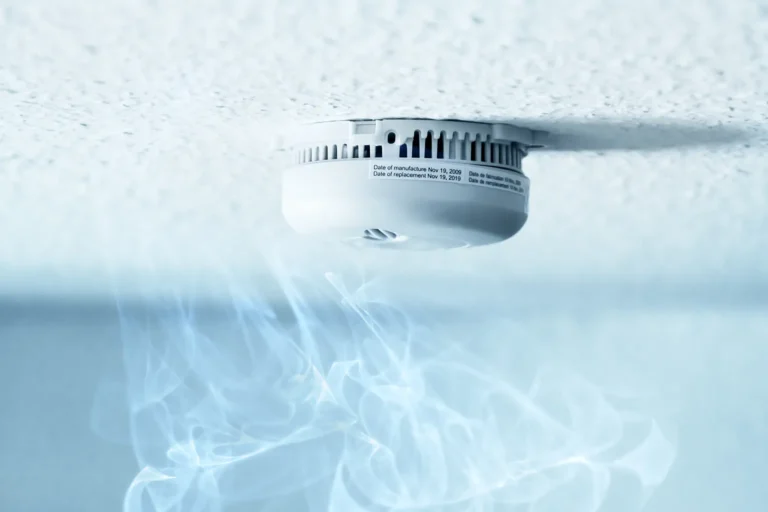
- Smoke alarms: Required inside every bedroom, outside each sleeping area, and on every floor of the home including basements and habitable attics. Landlords must provide written fire safety information to tenants at move-in. Tenants are responsible for maintaining smoke alarms during the tenancy, including battery replacement
- Carbon monoxide alarms: Required in all residential buildings with fossil fuel-burning appliances or attached garages. Installation is the landlord’s responsibility. Maintenance during the tenancy, including battery replacement, is the tenant’s responsibility under Washington law
- Written safety notice at move-in: Landlords must provide written notice to tenants at lease signing confirming that the dwelling is equipped with functioning smoke detection devices and informing tenants of their responsibility to maintain those devices
Mold and air quality
Under RCW 59.18.060(13), landlords are required to provide tenants with written information from the Washington Department of Health about the health hazards associated with indoor mold exposure and how tenants can control mold growth. This disclosure must be provided at move-in. While landlords are not specifically required to remediate mold, they are required to fix the underlying causes of mold growth such as plumbing leaks, roof failures, and inadequate ventilation.
Lead paint disclosure for older properties
If your Sammamish rental property was built before 1978, federal law requires you to provide prospective tenants with the EPA-approved lead hazard information pamphlet before lease signing, and to disclose any known lead-based paint or lead hazards in the property. The Washington Department of Health landlord resource page confirms this obligation and provides links to the required materials.
2026 update: Flood risk disclosure for new leases after December 31, 2026
Washington SB 6237, signed by Governor Ferguson in 2026, requires landlords to add a written flood risk disclosure to all new residential leases signed after December 31, 2026. For properties in or near a FEMA-designated flood hazard area, the disclosure must state that the property may be located in a special flood hazard area, clarify that the landlord’s insurance does not cover tenant personal property, and direct tenants to county hazard information. Check the FEMA Flood Map Service Center to determine whether your Sammamish property falls within a designated flood zone before preparing your 2027 lease template.
2026 Legislative Updates Every Sammamish Landlord Needs to Know
HB 2664: Certified mail no longer required for eviction notices (effective June 11, 2026)
House Bill 2664 removes the certified mail requirement for eviction-related and rent increase notices that was introduced by HB 1003 in 2025. After June 11, 2026, landlords may again mail required notices by first-class mail, properly addressed and postage prepaid. The bill passed 96 to 0 in the House and 48 to 0 in the Senate.
Several important requirements remain unchanged after June 11:
- The five-day mailing extension still applies when service is by mail rather than personal delivery
- Every termination notice must still include the exact calendar date by which the tenant must comply or vacate
- Personal service remains the preferred and primary method
For a complete breakdown of how HB 2664 changes the notice process and what Sammamish landlords need to update before June 11, see our Washington 2026 Rental Law and Compliance Guide and our detailed guide to Sammamish tenant-landlord laws.
SB 6237: Flood risk disclosure required for new leases after December 31, 2026
Rent increase notice requirements
Washington State requires landlords to provide at least 60 days written notice before any rent increase, regardless of the amount. This is a state minimum that applies to all Sammamish rentals. The notice must be in writing and must be served according to the notice service requirements in RCW 59.12.040. For a full overview of Washington notice requirements for rent increases and lease terminations, see the Washington Attorney General’s landlord-tenant resources.
Are your notice procedures and lease templates ready for the June 11 and December 31 deadlines?
SJA updates notice procedures and lease templates for all managed properties before every statutory effective date. If you are self-managing with forms from 2025 or earlier, both your notice process and your lease likely need to be updated before those deadlines arrive.
Tenant Screening Requirements in Sammamish
Washington State has specific requirements that govern how landlords must screen tenants. These apply in Sammamish and across all of King County:
- Screening criteria must be provided in writing: Before accepting any application or application fee, landlords must provide applicants with a written statement of their rental screening criteria, including all the factors that could result in a denial
- Adverse action notice required: If you deny an application based on screening criteria, you must provide the applicant with a written adverse action notice explaining the reason
- Application fees must be limited: Application fees are capped at the actual cost of the screening report and cannot exceed the landlord’s actual screening costs
- Fair housing laws apply: Washington’s fair housing laws prohibit discrimination based on race, color, national origin, religion, sex, disability, familial status, sexual orientation, gender identity, marital status, veteran status, and other protected categories. These protections apply throughout the screening, leasing, and tenancy process
For a comprehensive breakdown of how to conduct legally compliant tenant screening in Washington’s competitive rental market, see our Sammamish tenant screening guide.
Security Deposit Rules in Sammamish
Washington State law sets specific requirements for how security deposits must be handled. These all apply to Sammamish rentals:
- No statewide cap on deposit amount: Washington does not limit how much a landlord can charge as a security deposit. However, all deposits and non-refundable fees must be disclosed in writing in the lease agreement
- Separate account required: Security deposits must be held in a trust account separate from the landlord’s personal funds. The location of the account must be disclosed to the tenant in writing
- Move-in checklist required: Before accepting any deposit, the landlord must provide the tenant with a written move-in checklist documenting the condition of the property. Both parties must sign it
- Return within 21 days: After the tenancy ends, landlords must return the security deposit or provide a detailed written statement of deductions within 21 days. Deductions can only be made for unpaid rent and damage beyond normal wear and tear
- Documentation protects landlords: Detailed move-in and move-out documentation with dated photographs is the
Why Sammamish Landlords Hire a Property Manager
The legal requirements covered in this guide represent the minimum compliance framework for renting property in Sammamish in 2026. They are not static. Washington’s legislative session adds and amends landlord obligations nearly every year. The 2026 session alone changed eviction notice procedures, added flood risk disclosure requirements, and updated several other statutory obligations.
Self-managing landlords who keep up with these changes, maintain compliant lease templates, follow proper notice service procedures, and document everything correctly can absolutely operate successfully. The question is whether staying current with Washington’s evolving compliance landscape is the best use of your time as a property owner.
The landlords who hire a professional Sammamish property management company typically do so because:
- They want notice service, lease compliance, and habitability maintenance handled by a licensed team that tracks statutory changes as they happen
- They want tenant screening done correctly, with proper written criteria, adverse action notices, and fair housing compliance built into the process
- They want security deposits handled in a compliant trust account with proper documentation from move-in through move-out
- They want a licensed professional managing the relationship with tenants so that any legal issues that arise are handled with appropriate expertise
- They want their time back
For a full picture of what professional property management in Sammamish looks like, see our full-service Sammamish property management overview, our transparent pricing with no hidden fees, and the 8 written client guarantees that back everything we do.
Ready to make sure your Sammamish rental is fully compliant in 2026 and beyond?
SJA Property Management has served Sammamish property owners for 17 years. Trusted by 1,000+ homeowners across the Eastside. 800+ five-star reviews. Start with a free rental estimate, no obligation.
Get your free Sammamish rental estimate from SJA Property Management
You can also explore our full-service property management services or schedule a call with our Sammamish team to discuss your property and your goals.
Disclaimer: This article is intended for informational purposes only and does not constitute legal advice. Laws and ordinances referenced reflect Washington State law as of April 2026 and are subject to change. For questions specific to your property or situation, consult a qualified Washington State landlord-tenant attorney or contact the Washington State Attorney General’s landlord-tenant resource office.