
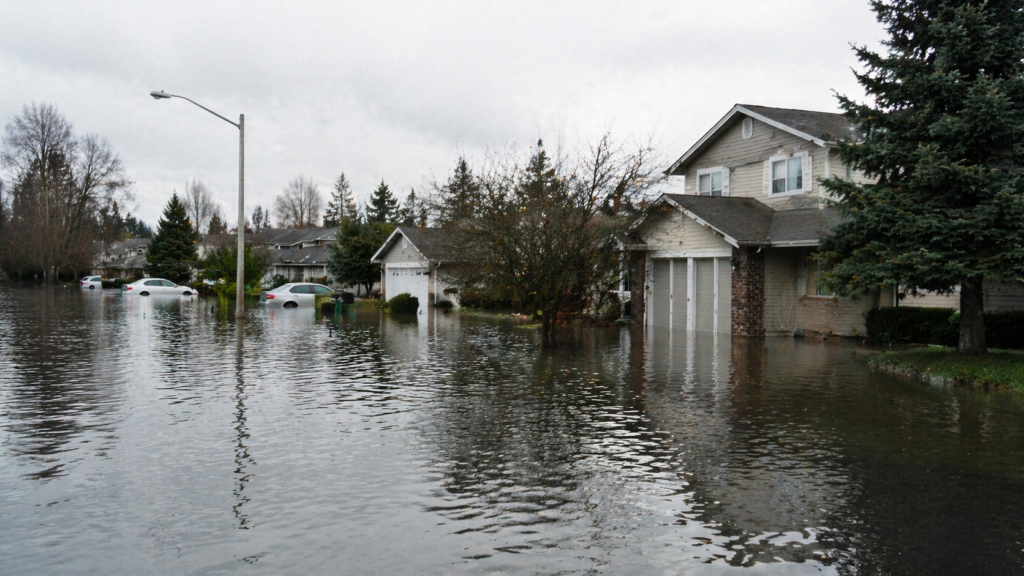
Washington just became the latest state to require flood risk disclosures in residential rental leases. California, Oregon, and Texas already had this requirement. Until this year, Washington only required flood disclosures in home sales, not rental agreements.
Senate Bill 6237 changes that. Governor Bob Ferguson signed the bill into law as part of a package of housing legislation in 2026. The law requires landlords to disclose flood risk in writing at lease signing for all new residential leases executed after December 31, 2026.
That gives landlords several months to prepare. It does not give them time to ignore it. A lease signed in January 2027 without the required disclosure language will not be compliant from day one, and the fix is not a complicated one if you plan ahead.
SB 6237 at a glance
Bill: SB 6237 (Washington 2026 Legislative Session)
Signed by: Governor Bob Ferguson, Chapter 234, 2026 Law
Bill effective date: June 11, 2026
Disclosure applies to: All new residential leases signed after December 31, 2026
Vote: 46 to 3 in the Senate, 65 to 28 in the House
Sponsored by: Sen. Jessica Bateman (D-Olympia), bipartisan support
Core requirement: Written flood risk disclosure in every new residential lease for properties in or near flood hazard areas, with insurance coverage notice and county hazard resource referral
Why This Law Exists: December 2025 Flooding in Western Washington
SB 6237 did not emerge from a policy debate about regulatory theory. It came directly from a specific event. In December 2025, severe flooding struck Western Washington and displaced renters across the region. Many of those tenants had no idea their homes sat in flood-prone areas. They had no flood insurance. Their standard renters insurance did not cover natural flooding. And they had never been told any of this when they signed their leases.
Sen. Jessica Bateman, the bill’s primary sponsor, said she did not know Washington lacked a rental flood disclosure requirement until she read reporting on the displaced tenants. She described what happened to renters as tragic. “This is just one way that we can help give people information and increase transparency,” she said.
Tenants interviewed after the flooding said the same thing: they would not have moved in if they had known the risk. One tenant, who lost most of her belongings, told reporters that the disclosure requirement would put the responsibility where it belongs. “Now, it’s your choice to protect yourself. It puts the onus on the landlord to be 100 percent clear,” she said.
For Washington landlords, that is also the right way to think about SB 6237. This is not a punitive law. It is a transparency requirement that gives tenants the information they need to make an informed decision and protect themselves. Complying with it well, rather than minimally, is the approach that builds the kind of landlord-tenant relationship that produces long-term tenancies and fewer disputes.
Not sure whether your rental property is in a FEMA-designated flood hazard area?
That is the first thing to determine before updating your lease. SJA reviews all compliance requirements for managed properties, including upcoming disclosure obligations. If you want a professional assessment of where your property stands before January 1, 2027, we can help.
Get a free rental analysis and compliance review from SJA Property Management
What SB 6237 Actually Requires: The Full Disclosure Breakdown
The law amends Washington’s Residential Landlord-Tenant Act (RCW 59.18) to add flood risk disclosure as a required element of new residential lease agreements. Here is exactly what the disclosure must cover, what it does not require, and where the liability lines are drawn.
| What the disclosure must cover | Details |
|---|---|
| Flood zone status | Written statement that the property "may be located in a special flood hazard area or an area of potential flooding" |
| Insurance coverage clarity | Disclosure that the landlord's insurance does not cover the tenant's personal possessions |
| Flood insurance recommendation | Tenants should be directed to consider purchasing renters insurance and flood insurance |
| County hazard information | Landlords must point tenants to county-level hazard information resources |
| When it applies | All new residential leases signed after December 31, 2026 |
| What it does not apply to | Existing leases in force before January 1, 2027. Lease renewals are not explicitly included in the initial bill language. |
| Liability for omission | Landlords are immune from civil liability for omission unless the omission is knowing and intentional |
The required disclosure language
The bill specifies that landlords must include written disclosure stating that the property “may be located in a special flood hazard area or an area of potential flooding.” This is the core language that must appear in every new lease for a qualifying property after December 31, 2026.
The disclosure must also:
- State clearly that the landlord’s insurance does not cover the tenant’s personal possessions
- Recommend that tenants consider purchasing both renters insurance and flood insurance
- Direct tenants to county-level hazard information so they can research the specific flood risk for the area
What the law does not require
- Rental advertisements are not affected. Flood risk disclosure is only required in the lease itself, not in any listing, advertisement, or pre-lease marketing material. This was the central concern of major landlord groups during the legislative process, and the bill was specifically structured to address it.
- Existing leases are not retroactively affected. Leases in force before January 1, 2027 do not need to be amended. The requirement applies only to new leases signed after that date.
- Landlords are not required to purchase flood insurance or ensure tenants do. The requirement is to disclose the risk and point tenants toward resources. What tenants do with that information is their decision.
- Knowing and intentional omissions carry liability. The bill provides immunity from civil liability for landlords who fail to include the disclosure, unless the omission is knowing and intentional. This is a significant protection compared to how other states handle non-disclosure. Oregon, by contrast, allows a tenant who suffers an uninsured loss from flooding without having received the required disclosure to seek damages or two months’ rent from the landlord.
Step 1: Check Whether Your Property Is in a Flood Hazard Area
Before you can write a meaningful flood disclosure, you need to know whether your property is actually in a FEMA-designated flood hazard area. Not every property in Washington State is at flood risk. But many are, particularly properties in low-lying areas near rivers, Puget Sound waterways, and the coastal areas of King, Snohomish, and Pierce Counties.
The authoritative source for flood zone status is the FEMA Flood Map Service Center. Enter your property address to see whether it falls within a Special Flood Hazard Area (SFHA), which FEMA designates as a 100-year floodplain with a 1 percent annual chance of flooding, or a Moderate Risk Flood Hazard Area with a 500-year floodplain designation.
A few things to keep in mind when checking:
- FEMA flood maps are not always current. Some areas that have historically flooded may not yet be remapped to reflect updated risk levels. The December 2025 flooding that triggered SB 6237 affected areas that were not designated high-risk by FEMA maps at the time.
- Check the specific parcel, not just the neighborhood. Flood zone boundaries can run through individual blocks or even individual lots. Your property may be in a different flood zone classification than a neighboring property.
- County assessor records and local planning departments sometimes have more granular flood risk information than FEMA maps, particularly for areas that have been recently remapped or are under active review.
- If your property sits near any waterway, drainage basin, or historically wet area, treat the FEMA map as a starting point, not a final answer. The December 2025 flooding showed that FEMA-mapped risk and actual flood behavior in Western Washington do not always align.
Lease renewals are coming up in the next few months. Is your template ready for January 1?
Generic lease templates downloaded from the internet will not include SB 6237 flood disclosure language. An attorney-reviewed, Washington-compliant lease will. SJA manages lease compliance for every property in our portfolio. If your lease was last reviewed in 2024 or earlier, it needs an update before you sign anything after December 31.
Talk to SJA about Washington-compliant lease management, free consultation
Step 2: Update Your Lease Before December 31, 2026
For properties confirmed to be in or near a flood hazard area
Your lease disclosure should include all of the following:
- A clear written statement that the property may be located in a special flood hazard area or an area of potential flooding
- A statement that the landlord’s insurance policy does not cover the tenant’s personal belongings
- A recommendation that the tenant consider purchasing renters insurance and flood insurance
- A reference to county hazard information resources where the tenant can research flood risk for the specific area
The FEMA National Flood Insurance Program (FloodSmart) is the primary resource for tenants interested in purchasing flood insurance. Contents-only flood coverage for renters is available through the National Flood Insurance Program. FEMA-run renters flood coverage typically costs several hundred dollars per year for contents coverage, which is significantly less than the cost of replacing flooded belongings. Including the FloodSmart URL or the general reference to the NFIP in your lease gives tenants a meaningful starting point.
For properties where flood risk is unclear or disputed
The bill uses the phrase “may be located in a special flood hazard area.” That language is broad enough that many landlords with properties near waterways, in low-lying areas, or in regions affected by the December 2025 flooding may reasonably choose to include the disclosure even if their FEMA flood zone designation does not explicitly require it.
Given that the liability protection for unintentional omissions is narrow, and given that FEMA maps do not always reflect actual flood experience in Western Washington, adding the disclosure to leases where there is any reasonable question about flood risk is a conservative and legally sensible approach. This is one of the situations where doing more than the minimum is the right call.
What to avoid
- Do not rely on a generic internet lease template. The flood disclosure language needs to be accurate, include the required elements, and be integrated into the lease in a way that the tenant clearly sees and acknowledges it.
- Do not assume lease renewals are exempt without reviewing the final bill language and consulting with a Washington landlord-tenant attorney. The initial bill text focuses on new leases, but the prudent approach is to treat renewals as new leases for disclosure purposes.
- Do not treat this as a one-time update. Washington’s disclosure requirements have expanded in the past several years and are likely to continue expanding. Every time you refresh your lease template, confirm it reflects current state law.
For the broader picture of what Washington landlord-tenant law currently requires in terms of disclosures, notices, and lease content, see our Washington 2026 Rental Law and Compliance Guide and our comprehensive guide to Seattle tenant-landlord laws. Both guides are updated to reflect 2026 legislative changes and will be updated again after January 1, 2027.
What the Industry Said: Why Major Landlord Groups Did Not Oppose This
For a bill that creates a new obligation on landlords, SB 6237 moved through the legislature with remarkably little opposition from major property owner organizations. The Rental Housing Association of Washington (RHAW) weighed in during the legislative process, and their position is instructive for how landlords across Washington should think about this requirement.
Sean Flynn, president of the Rental Housing Association of Washington, was initially concerned that a mandatory disclosure could cause unnecessary fear or stigmatize certain properties in the market. But the final bill was structured to apply only to leases and not to rental advertisements. That distinction resolved his concern. “What ended up getting passed, I think, meets everyone’s goals and is a good bill,” Flynn told The Daily Chronicle. “It’s pretty reasonable.”
That assessment reflects the approach SJA takes to compliance requirements generally. Washington’s disclosure requirements have expanded significantly over the past decade, from mold information to lead paint to tenant resource notices on eviction forms. None of these individually represent a major operational burden. Collectively, they mean that a self-managing landlord using an outdated lease or a generic template is almost certainly missing something. The question is not whether any individual requirement is burdensome. It is whether you have a system that keeps pace with all of them together.
What SB 6237 Tells You About Where Washington Landlord Law Is Heading
SB 6237 is part of a broader trend that landlords in Seattle and across the Puget Sound need to understand. Washington is actively adding disclosure requirements to rental leases, particularly around risks that tenants cannot readily see or evaluate on their own. Mold. Flood risk. Insurance coverage gaps. These requirements are not going away. They are accumulating.
The December 2025 flooding that triggered SB 6237 is also not a one-time event. Western Washington has experienced several significant flooding incidents in recent years, and climate projections suggest that weather-related flooding will remain a real and recurring risk for properties in low-lying areas across the Puget Sound region. Landlords who own property near waterways, drainage basins, or historically wet areas should treat flood risk as an ongoing property management consideration, not just a lease compliance checkbox.
For landlords thinking about how to manage water damage responsibilities more broadly, our guide on water damage responsibility in Seattle rental properties covers the landlord and tenant obligations under Washington State law when damage actually occurs. Understanding the full picture, from disclosure through damage response, is how professional property management protects owners from the full range of exposure.
SJA Property Management: Lease Compliance Built In, Not Bolted On
SJA has managed rental properties across Seattle, Bellevue, Redmond, Kirkland, Sammamish, and Bothell for 17 years. Our leases are attorney-reviewed and updated for every statutory change. When SB 6237 disclosure language becomes required for leases after December 31, 2026, our templates will be ready before that date, not after a new tenant signs something non-compliant.
This is what our owner-clients do not have to think about. When the legislature adds a disclosure requirement, we track it, update our templates, and make sure every new lease we execute reflects current law. That applies to flood risk disclosure, mold disclosure, notice language, Just Cause Eviction Ordinance disclosures for Seattle properties, and every other requirement that has accumulated under Washington landlord-tenant law over the past several years.
Trusted by 1,000 or more homeowners. 800 or more five-star reviews. Our 8 written client guarantees back everything we do. Our full-service property management handles lease preparation, compliance, tenant screening, notice service, and maintenance coordination so our owners do not have to track these changes themselves.
Your lease is your first legal protection. If it was last reviewed before 2026, it needs an update before you sign anything after December 31.
SJA offers a free rental estimate and consultation for Seattle and Eastside property owners. No obligation. Find out what your property is worth and whether your current lease and management process are ready for 2027.
You can also review our transparent property management pricing with no hidden fees, our full-service management overview, and stay up to date on Washington landlord law by following the SJA Seattle property management blog.
Disclaimer: This article is intended for informational purposes only and does not constitute legal advice. SB 6237 was signed by Governor Ferguson in 2026. The flood disclosure requirement applies to leases signed after December 31, 2026. Confirm current requirements and appropriate lease language with a qualified Washington State attorney before updating your rental agreements.