
Rent vs. Sell Calculator
If you’re moving, inheriting a property, or just done living in a house you own, you have a decision worth tens of thousands of dollars either way. This calculator compares what you’d walk away with if you sold today against what you’d likely have if you rented it out, including the costs most people forget to count.
Enter your numbers for a plain-English comparison.
Your comparison
Sell today
$0
What you would walk away with today. A negative number means you would owe at closing.
Rent for 5 years
$0
Rent you keep after costs and tax, plus your equity at the end.
Break-even
Not yet
The year renting pulls ahead.
Year by year
How far ahead or behind renting is, year by year.
Assumptions
Change any of these under Advanced.
Annual detail
| Year | Gross rent | Expenses | After-tax cash | End balance | Rent value |
|---|
Results are estimates for informational purposes only. This calculator does not provide financial, investment, tax, or legal advice.
How To Read Your Results
Your results show three things.
Sell today is what you’d actually put in your pocket after paying off the mortgage and covering selling costs: agent commission, closing costs, and getting the place ready. It’s usually lower than people expect.
Rent for [N] years is what you’d be worth at the end of that period, not what you’d have in cash. It combines the rent you collected, the equity built as your tenant paid down the loan, and any gain in the home’s value, minus the costs of being a landlord.
Break-even is the year renting pulls ahead of selling and investing the proceeds. If that never happens within your time horizon, selling is likely the stronger financial move.
Two things the model can’t show you.
The first is that these are wealth figures, not cash. Renting can come out well ahead on paper while your bank balance barely moves for years, because most of the gain is equity and appreciation you can’t spend until you sell.
The second is everything that isn’t money. If the two totals land within about 10% of each other, treat it as a tie and decide on something else, because no model can tell you whether you’ll resent the 9pm call about a broken water heater. When the numbers are close, how you want to spend your time is the deciding factor, and that’s a real one.

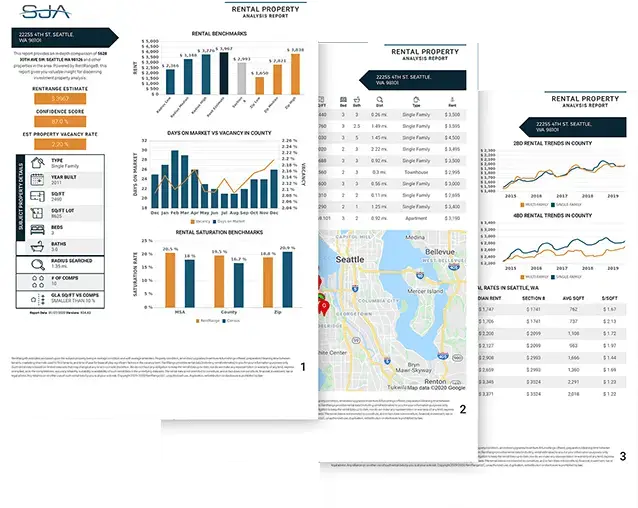
Not Sure What You're Property Could Rent For?
We’ll give you a free rent estimate based on what comparable homes in your neighborhood are actually leasing for, not an algorithm’s guess. No obligation, and we’ll tell you if renting doesn’t make sense for you.
When Renting Usually Wins
- You have a low fixed-rate mortgage. A 3 to 4% loan is an asset. Sell and it’s gone forever.
- Rent covers the payment with room to spare. Mortgage, taxes, insurance and a real maintenance reserve, and it still funds itself.
- You might move back. Selling is permanent. Renting keeps the door open.
- You’d owe significant capital gains on a sale. Above the exclusion, or already used it, a sale can trigger a large bill.
- You want long-term income more than cash now. Building toward retirement rather than solving a present-day need.

When Selling Usually Wins
- You need the equity now. If it’s the down payment on your next house, borrowing against a rental is slower and costlier than people assume.
- Big-ticket repairs are due. Roof, furnace, sewer, siding. A tenant doesn’t make those cheaper.
- You’d lose your capital gains exclusion. Up to $250,000 of profit, or $500,000 filing jointly. Rent too long and it’s gone.
- The numbers are thin once you’re honest. Near-zero cash flow after real vacancy and reserves is a second job for very little.
- You live far away. Solvable by hiring a manager, but that cost belongs in the math.
- You don’t want to be a landlord. A legitimate reason that needs no financial justification.

The Costs People Forget
Almost every rent-vs-sell decision goes wrong in the same place: someone compares the rent to the mortgage payment, sees a gap, and calls it profit. It isn’t. Here’s what lives in between.
Vacancy. Your house will be empty sometimes, and every empty day you’re covering the mortgage, the utilities and the lawn with nothing coming in. The common planning guideline is 8%, about one month a year. Across the homes SJA manages it runs below 5%. Plan closer to the guideline if you’re doing this yourself. Any calculator that lets you model 0% vacancy is lying to you.
Turnover. Cleaning, paint, the repairs you postponed, worn carpet, new photos, a new listing. Expect $1,000 to $4,000 depending on condition, and tenancies with SJA average three years, so budget for it on that cycle.
Maintenance. The common figures are 1% of the home’s value per year, or 8% of rent. On a high-value Puget Sound house those give very different answers. Run both, use the higher.
Capital expenditure. Roofs, furnaces, water heaters, sewer lines. Nothing for years, then everything at once. Set aside roughly 5% of rent. The owners who get hurt are the ones who never started the fund because nothing had broken yet.
Insurance. Your homeowner’s policy generally won’t cover a tenant-occupied property, and finding out after a claim is a bad way to find out. A landlord policy costs more and premiums have been climbing.
Compliance. Washington sets requirements around deposits, condition checklists, notice periods and habitability, and Seattle adds more on top. Rent increases are capped now too. None of it is unmanageable, but the penalties for getting a deposit or a notice wrong land on you.
Screening and leasing. Advertising, showings, background and credit checks, income verification, a compliant lease. First-time landlords underestimate this by the widest margin, and the wrong tenant costs more than every other item here combined.
Taxes. Rental income is reported differently, and you’ll claim depreciation that gets taxed back when you sell. Talk to a CPA before the first lease, not after the first return.
Your time. You’re the leasing agent, the bookkeeper, the maintenance dispatcher and the after-hours emergency line. It’s not a cost you write a check for, which is why it never makes the math. If you’d rather not be, that fee belongs in the calculator above.
Roughly half of gross rent goes to operating costs before you touch the mortgage. That’s what to compare against.
What Being a Landlord Is Actually Like
The financial model is the easy part. Here’s the part it can’t show you, and the part nobody selling you property management usually brings up.
Most of this is solvable. A manager takes the calls, handles the leasing and absorbs the compliance, which is what the fee buys. Ownership risk stays yours either way. Use a real fee in the calculator above rather than leaving it at zero.
The time
A good tenant in a well-maintained house takes a few hours a month, sometimes none. The problem isn’t the total, it’s the distribution. The hours arrive in a burst, usually at the worst moment.
The calls
Water heaters fail at night. Furnaces fail in January. If you self-manage, you are the emergency contact, including on vacation.
The bad-tenant scenario
Most tenancies are uneventful. Some aren’t, and non-payment in Washington is a legal process with defined steps that takes time and money. Rare, but size the risk before you take it on.
The part people don't mention
It’s your house. You chose that paint. Watching someone else live in it, and not maintain it the way you did, bothers some owners more than they expect. Others feel nothing. Worth knowing which you are.
Renting out a house in the Seattle and Puget Sound area
The regional headlines you’ve been reading are mostly about apartments. Your house is in a different market.
Citywide median rent across all property types sits near $2,060 and has drifted down slightly over the past year, driven by a wave of new apartment buildings competing for tenants. Detached houses haven’t followed. A three-bedroom single-family home in Seattle rents for somewhere between $3,700 and $3,950 depending on condition and neighborhood, and that figure has held up because your house was never competing with a 300-unit tower offering two months free. It competes on space, a yard, parking, a garage, and a school assignment. No apartment building can offer those.
That gap matters on the Eastside in particular. Bellevue, Kirkland and Redmond have absorbed tech employment moving across the lake, and the light rail extension has widened the tenant pool to people who don’t want to drive the bridges. Family demand for three and four bedroom houses in strong school districts is the most durable part of this market.
Supply is tightening rather than loosening. New apartment deliveries dropped sharply in the past year and permitting has thinned, which means the renter-favorable conditions of 2024 and 2025 are fading rather than deepening.
How long it takes. Plan on 20 to 45 days to lease, driven mostly by price and condition. Overpricing is the expensive mistake, because a month of vacancy on a $3,700 house costs more than a year of the rent bump you were holding out for, and Washington’s rent cap limits how fast you can correct upward later.
When you list matters. Late spring through summer is when families move, because they move around the school calendar. A house listed in June leases faster and at a better number than the same house listed in November. If you have flexibility on your move-out date, this is the single easiest thing you can do to improve your outcome. If you don’t, budget for a longer vacancy and price accordingly.
We manage homes across Seattle, the Eastside and north to Everett and Bothell, and the right rent number varies more by neighborhood than most owners expect.
If you decide to rent, should you manage it yourself?
Self-managing usually makes sense if you own one property, live close to it, are reasonably handy, have a flexible schedule, and are comfortable with the legal side. Plenty of owners do this well and keep the fee. If that’s you, the honest answer is that you probably don’t need us.
Hiring a manager usually makes sense if you live far away, own several properties, travel often, have a demanding job, or simply don’t want to be the person who answers the phone at 9pm.
Here’s what it costs, so you can put real numbers in the calculator rather than a guess. SJA charges 8.9% of collected rent each month for a single-family home, condo or townhome, with a $235 monthly minimum. There’s also a leasing and onboarding fee of 60% of one month’s rent when a new tenant is placed, and a renewal fee of 25% of one month’s rent when a tenant stays on. Most Puget Sound managers land in a similar range, typically 8% to 12% monthly with tenant placement fees anywhere from half to a full month’s rent.
The leasing fee is the one owners forget. It’s a real cost that lands in year one and again at every turnover, so include it rather than modeling the monthly percentage alone. On a $3,700 house that’s roughly $2,200 the first time.
Two things worth knowing about how the fee behaves in the math. It’s deductible as an ordinary operating expense against your rental income, so the after-tax cost is lower than the sticker. And it partly pays for itself if a manager fills the house faster than you would, because a month of vacancy on a Seattle house costs more than seven months of management fees.
Set the management fee to 0% in the calculator above to compare both paths directly.
Full-Service Seattle Management Services
At SJA Property Management, we work with both residential and multi-family property owners throughout the greater Seattle area.
Tenant Management
We screen tenants, conduct background checks, and manage lease agreements.
Rent Collection
We collect rent, handle late payments, and manage financial records for your property.
Property Maintenance
When necessary, we coordinate repairs and maintenance for your property. We also perform on-site property evaluations periodically.
Marketing and Leasing
We advertise and market your property across all major rental websites, manage tenant showings and facilitate leasing.
Legal Compliance
We ensure your property complies with local, state, and federal regulations, including fair housing laws.
Financial Reporting
We provide you with financial statements, budgets, and performance reports every month.
Eviction Processes
If we place a tenant who ceases paying rent, we file the initial eviction paperwork with the Washington court.
Emergency Response
We provide tenants with a 24/7 hotline for reporting any urgent maintenance issues so we can handle emergencies promptly.
Vacancy Turnover Optimization
We streamline turnover timelines with pre-scheduled evaluations, vendor coordination, and automated leasing workflows to minimize downtime.
Frequently Asked Questions
How long does it take to rent out a house in the Seattle area?
Most homes lease in 20 to 45 days depending on price, condition and location. Timing matters more than owners expect, because families move around the school calendar. A house listed in early summer generally leases faster, and at a better number, than the same house listed in November.
What are the tax implications of renting out my former home?
Rental income is taxable and reported differently than your current return. You’ll claim depreciation each year, which lowers your tax bill while you own the property and then gets recaptured and taxed when you sell. Renting for too long can also cost you the primary residence capital gains exclusion. These are frequently the largest numbers in the whole decision, and they’re the ones a calculator can’t fully model. Talk to a CPA before your first lease.
How much does a property manager cost in Seattle?
Most Puget Sound managers charge 8% to 12% of collected rent monthly, plus a tenant placement fee of roughly half to a full month’s rent. SJA charges 8.9% monthly with a $235 minimum, and 60% of one month’s rent to place a tenant. The placement fee is the one owners forget when they run their numbers, so include it in year one and again at each turnover.
How do I know if my rent estimate is realistic?
Look at what comparable homes in your neighborhood have actually leased for recently, not what similar homes are currently listed at. Active listings include properties that are overpriced and sitting. Online estimates are a reasonable starting point, but they tend to miss condition, layout and school assignment, which are exactly what drives rent on a house.
What if the rent doesn't cover my mortgage?
It can still work, but only deliberately. Negative cash flow means you’re funding the property each month in exchange for loan paydown and appreciation, which is a reasonable trade if you have income to support it and a long horizon. It’s a bad position if the gap is large, your reserves are thin, or you’d be forced to sell in a downturn. Run the calculator with honest vacancy and maintenance numbers before deciding you can carry it.
How long can I rent out my house before I lose the capital gains exclusion?
The exclusion generally requires that the home was your primary residence for 2 of the 5 years before you sell, which is why a long rental period can put it out of reach. There are additional rules affecting how much of the gain qualifies once a home has been rented, and depreciation you claimed while renting is taxed separately when you sell regardless. The amounts involved are usually large enough that this is worth a conversation with a CPA before you sign a lease, not after.
Can I sell a house with tenants in it?
Generally yes. A fixed-term lease typically transfers with the property, so the buyer inherits your tenant and the existing terms. That narrows your buyer pool to investors, since most owner-occupant buyers want possession at closing, and it can affect both timing and price. Month-to-month tenancies give you more flexibility, but Washington’s just cause requirements limit how and when a tenancy can be ended, so ending one in order to sell isn’t automatic. If selling is a real possibility within your lease term, factor that into how you structure the lease from the start.
What happens if my tenant stops paying rent?
Washington has a defined legal process for non-payment, and it isn’t fast or informal. You serve a written notice in a specific statutory form, the tenant has a window to pay or move out, and if neither happens you file an unlawful detainer action in court. A judge decides, and only a sheriff can remove a tenant. The notice periods, forms and service methods have to be followed exactly, because getting any of it wrong is the most common reason a case gets dismissed and has to start over. Washington also requires just cause to end a tenancy, so this isn’t something you can resolve by declining to renew. Budget for lost rent plus legal costs. The Washington Attorney General’s office publishes current requirements and the official notice forms, and a landlord-tenant attorney should look at your specific situation before you serve anything.

No Obligation
Still not sure?
That’s normal. The numbers rarely settle this on their own, and the parts that matter most, your tax position and whether you actually want to be a landlord, aren’t things a calculator can weigh for you.
We’ll look at your property, give you a realistic rent figure, and walk through what the first year would look like. If renting doesn’t make sense for you, we’ll say so. Owners stay with us an average of 8.4 years, which only happens if we’re straight with them at the start.