
Key Takeaways
- Catch problems early. Regular inspections help you find leaks, moisture and safety issues before they turn into expensive repairs.
- Inspect at least once a year. Plan for move-in and move-out inspections, plus a routine evaluation at least annually during the tenancy.
- Follow Washington’s notice rules. You generally need to give at least two days’ written notice before a routine inspection, and notice alone doesn’t let you enter over a tenant’s objection.
- Check Seattle’s extra requirements. In Seattle, the notice should also state the purpose of the visit and name a contact person.
- Document everything. Dated photos and condition reports support fair security deposit decisions, but damage charges also need estimates or invoices.
- Don’t rely on RRIO alone. Seattle’s city inspections happen only every 5 to 10 years and don’t replace regular property evaluations.
A rental property inspection is one of the most practical ways to protect your investment. Regular inspections help you catch maintenance problems early, document your home's condition, identify safety concerns and prevent small problems from becoming expensive repairs.
At SJA Property Management, we manage 1,000+ homes in Washington and have 17 years of experience. We call these visits property evaluations, and we complete a 40-point evaluation of every home we manage at least once a year.
On-time rent tells you the tenant is paying. It doesn't tell you whether a slow leak has started under the kitchen sink, a bathroom fan has stopped working or a smoke alarm needs replacing. Regular evaluations help you find and address these problems before they get worse.
What Is a Rental Property Inspection?
A rental property inspection is a scheduled walk-through that documents your home's condition. It looks for maintenance needs and safety concerns, and it notes anything visibly out of line with the lease.
The main types are:
| Inspection type | When it happens | What it helps protect |
|---|---|---|
| Move-in | Before the tenant moves in | A signed record of the home's starting condition |
| Routine (mid-lease) | During the tenancy, usually once a year | Early warning on repairs, safety and lease concerns |
| Exterior | Between interior visits, such as before the rainy season | Roof, gutters, drainage and siding |
| Move-out | After the tenant leaves and returns the keys | Fair, documented security deposit decisions |
| Rent-ready evaluation | Before the home is listed for rent | A clean, safe, market-ready home for the next tenant |
A routine evaluation assesses the property's condition and checks how its major systems are working. It isn't a substitute for a professional home inspection, specialized technical testing or a city-required inspection under Seattle's Rental Registration and Inspection Ordinance (RRIO). When something needs a closer look, the next step is a licensed specialist.
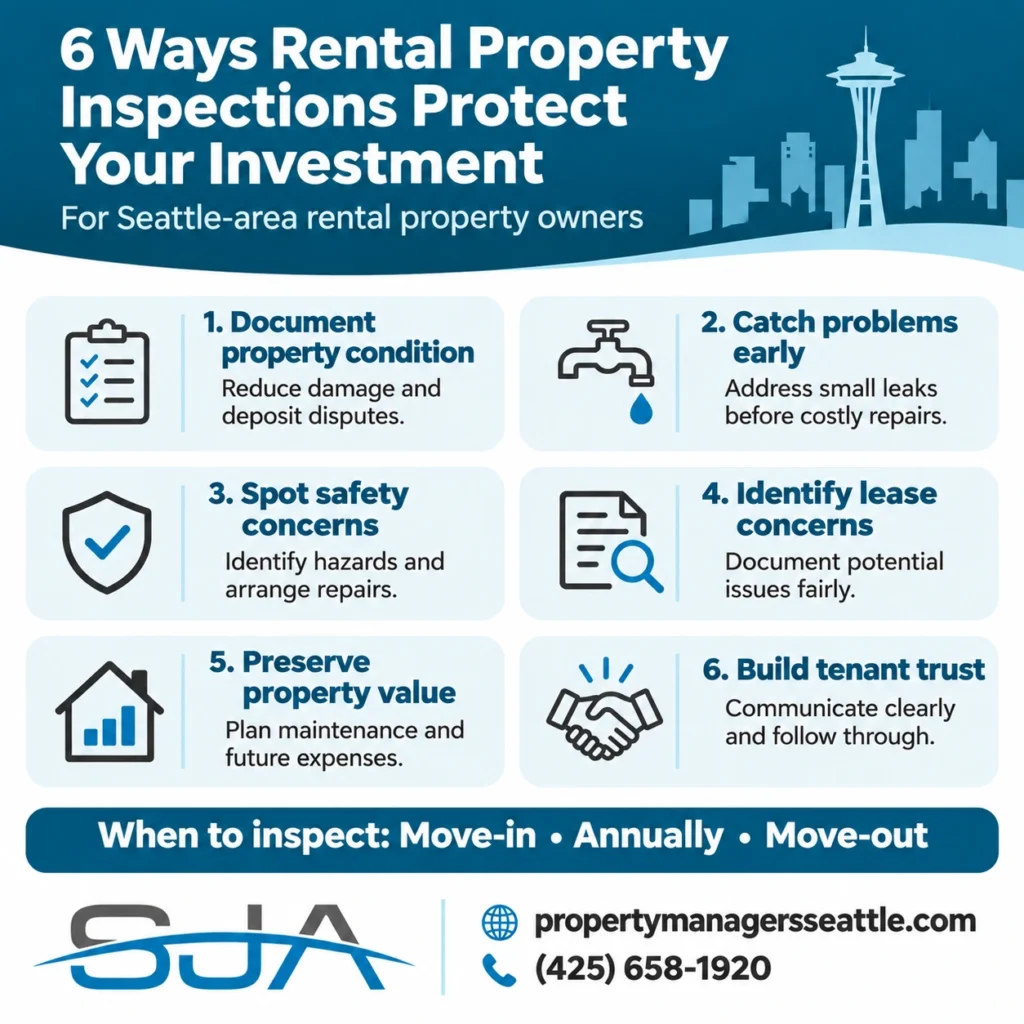
Why Do Landlords Do Inspections? 6 Ways They Protect Your Investment
Landlords do inspections to see the property's real condition, fix problems while they're small and keep records that hold up if there's ever a dispute.
Document Damage and Prevent Disputes
A move-in condition report sets the baseline, and Washington requires one if you collect a security deposit. Under RCW 59.18.260, you need a written checklist describing the home's condition, signed and dated by you and the tenant, with a copy for the tenant. If you collect a deposit without one, you can be liable to the tenant for the full deposit amount.
Routine and move-out reports show what changed during the tenancy. Dated photos help distinguish normal wear and tear from property damage, such as faded paint versus a broken door. That distinction matters when deciding which repairs can legally be deducted from a security deposit.
Photos alone don't settle a deduction, though. Within 30 days after move-out, Washington requires a full and specific written statement for any amount kept from the deposit, with copies of estimates or paid invoices for damage charges (RCW 59.18.280). Good records make that statement easier to support, but they never make ordinary wear deductible.
Catch Small Problems Before They Become Costly Repairs
In Seattle’s wet climate, some of the most expensive repairs start with moisture problems that are easy to miss. Failing bathroom caulking, poor ventilation and clogged gutters may seem like minor concerns, but left unchecked, they can cause significant damage.
Consider a slow leak under a kitchen sink. Over several months, it can soak the cabinet base, warp nearby flooring and eventually reach the subfloor. What could have been a simple plumbing fix becomes a much bigger repair.
Tenants don’t always notice these problems or realize how serious they are. Regular evaluations give you another opportunity to catch them early.
Edwin Duran, Code Compliance Operations Manager for the Seattle Department of Construction and Inspections (SDCI), discussed the importance of early repairs during an episode of the SJA podcast about Seattle’s RRIO rental inspection program, hosted by SJA CEO Devin Easterlin:
“If we can catch it soon and quickly and fix it, then you know that’s a lot better.”
Routine evaluations give you a second set of eyes, but they don’t replace tenants reporting problems as they arise. Both are important parts of proactive rental property maintenance, particularly in Seattle, where unresolved moisture issues can lead to mold problems.
Identify Safety Hazards and Reduce Liability
A walk-through confirms that basic safety features still work, including smoke and carbon monoxide alarms, handrails, clear exits, visible electrical hazards and water heater strapping.
In the same episode, Devin recalled smoke detectors helping stop fires and carbon monoxide detectors catching malfunctioning furnaces. Duran added that these alarms are probably the most common reason Seattle rentals fail RRIO inspections, often because someone pulled a battery when one started chirping. A 10-year battery alarm avoids that problem.
Documenting safety concerns and completing repairs promptly helps demonstrate responsible property ownership. Those records may also support an insurance claim. Regular evaluations complement a good landlord insurance strategy, although coverage ultimately depends on your policy and the circumstances.
Identify Potential Lease Violations
Evaluations can also reveal signs of a lease issue, such as an unapproved pet, smoking, unapproved alterations or more occupants than the lease allows.
A sign isn't proof, however. What looks like an unapproved pet may be a visitor's animal or a legally protected assistance animal. The right next step is a conversation or written follow-up, not an accusation.
Preserve Long-Term Property Value
Year-over-year reports show how your property is aging and which big expenses are coming, such as a roof, furnace, water heater or major appliance. That lets you plan instead of being surprised.
A routine evaluation can't tell you exactly how many years a furnace has left. However, knowing how your property's major systems are aging makes it easier to budget for maintenance and emergency repairs, plan renovations and keep your home competitive with other rentals.
Improve Tenant Relationships and Retention
Handled well, evaluations show tenants that you care for the home they live in. They're also a natural time for tenants to mention small issues they haven't reported yet.
Communication makes the difference. Washington sets the minimum notice, which we cover below. In our experience, though, the more notice, the better, along with a quick explanation of why the visit is happening. Prompt follow-up on anything the tenant raises builds trust, too.
Respectful communication and timely repairs are important parts of building strong tenant relationships and improving retention. However, visits that are too frequent or poorly explained can have the opposite effect.
How Often Should You Inspect a Rental Property?
Inspect at move-in and move-out, and complete a routine evaluation at least once a year in between. That’s the same advice SJA CEO Devin Easterlin gives owners on our podcast:
“One thing that I always advise is you want to be going through these properties at least yearly.”
Devin Easterlin, SJA CEO
Devin often sees problems arise when owners manage a rental property from out of state and take a “set it and forget it” approach. Rent keeps arriving on time, but a ceiling leak, cracked tile or unauthorized pet could go unnoticed for months.
An extra visit can make sense for a specific maintenance or safety concern. A quick exterior check before Seattle’s rainy season can also catch clogged gutters and roof issues early, with notice given where required.
Annual inspections are a recommended practice, not a Washington legal requirement. State law (RCW 59.18.150) doesn’t set a numerical limit on routine inspections. However, landlords can’t abuse their right of access or use it to harass tenants, so every visit should have a legitimate purpose.
In this clip from the SJA podcast, Devin and Edwin Duran discuss proactive maintenance and why annual property evaluations matter.
What Does a Landlord Look at During an Inspection?
A landlord looks at the home's condition, not the tenant's lifestyle. Property managers look for the same things during a routine evaluation:
- The exterior, including the roof, gutters, siding and drainage
- Plumbing fixtures and signs of leaks
- Kitchens and bathrooms, including caulk, cabinets and ventilation
- The furnace, water heater and other major systems
- Floors, walls, doors and windows
- Smoke and carbon monoxide alarms
- Visible moisture, mold or pests
- Visible damage and possible lease concerns
In the Seattle area, moisture deserves extra attention.
An inspection is not a search. Landlords shouldn't go through drawers or belongings, read mail or photograph personal items. The goal is to document the property itself.
If you self-manage, our free landlord checklist bundle includes condition and safety checklists to help you stay organized.
Rental Property Inspection Laws in Washington and Seattle
In Washington, you generally must give tenants at least two days' written notice before entering for a routine inspection (RCW 59.18.150). The main exception is an emergency. To show the home to prospective tenants or buyers, one day's notice is enough.
Under state law, the notice must give the date and exact time of entry, or a window with the earliest and latest possible times. It must also include a phone number the tenant can call to object or reschedule. In Seattle, the city's guidance adds that the notice should state the purpose of the entry and name a person the tenant can call (City of Seattle: Notice to Enter a Rental Unit).
Other key rules include:
- Enter only at reasonable times.
- Tenants may not unreasonably refuse a properly noticed inspection.
- Landlords may enter without consent only in an emergency or if the tenant has abandoned the home.
- Landlords may not abuse the right of access or use it to harass a tenant.
- After receiving written notice of a violation, a landlord or tenant who keeps violating these rules can owe up to $100 for each further violation.
Notice and consent are separate requirements, though, and giving notice doesn't let you enter over a tenant's objection. Outside an emergency or abandonment, Washington law allows entry by the tenant's consent or a court order, and Seattle's guidance says the renter must agree to the entry.
So, can a landlord enter without notice or permission? Generally, no.
For a broader look at state rules, see our Washington rental law compliance guide.
Do Seattle's RRIO Inspections Replace Regular Property Evaluations?
No. Seattle's Rental Registration and Inspection Ordinance (RRIO) checks registered rentals against basic housing health and safety standards. The city selects properties for inspection at least once every 5 to 10 years, and the program sets its own timing and exemptions (City of Seattle RRIO).
SDCI's Edwin Duran also explained on our podcast that RRIO covers a limited subset of Seattle's housing maintenance standards, so passing doesn't mean a property meets every rule. A passed inspection also says nothing about a leak that starts the following winter. Routine evaluations fill that gap. For registration, fees and how to prepare, see our Seattle RRIO inspection guide.
How SJA Protects Your Investment Through Property Evaluations
Our property evaluations give you a clear picture of your rental's condition without having to visit it yourself. Our services include Rent Ready Evaluations and electronic move-in and move-out reports, helping you document the property's condition at different stages of a tenancy.
During the tenancy, we conduct an annual 40-point interior and exterior property evaluation. You'll receive a written report with photos. Annual evaluations are included in our property management services.
A report is only useful if someone acts on it. If an evaluation reveals a damp sink cabinet or a loose handrail, our maintenance team can help coordinate the necessary repairs and follow-up rather than simply noting the problem in a report.
Whether you live outside the Seattle area, own several rental properties or simply have a busy schedule, knowing how your investment is being cared for can make rental ownership considerably less stressful. You'll also have better information when making decisions about repairs, maintenance budgets and future improvements.
Want a clearer picture of how your rental is being cared for? Schedule a call with our team to learn how we can help protect your investment.
Frequently Asked Questions
Can a Tenant Refuse a Rental Property Inspection in Washington?
Not without a good reason. A tenant can't unreasonably refuse a properly noticed inspection at a reasonable time, but they can raise a legitimate objection, such as a scheduling conflict, and ask to reschedule. Even if a refusal seems unreasonable, the landlord can't force entry. If the dispute continues, get legal advice.
Can a Landlord Take Photos During a Rental Property Inspection?
Photos that document the property's condition, such as damage, leaks or safety issues, are a standard part of an inspection report. Tell the tenant why you're taking them, and keep the focus on the home rather than people, personal belongings or private papers. Permission to enter isn't permission to photograph everything.
How Much Does a Rental Property Inspection Cost?
It depends on the type of inspection, who performs it and your management agreement. Specialist assessments, such as a roofer's or plumber's evaluation, are usually priced separately. At SJA, annual inspections are included in our published management services.
Does a Tenant Have to Be Home During a Rental Property Inspection?
Generally, no. Washington law requires proper notice and the tenant's consent, which the tenant can't unreasonably withhold, but not the tenant's presence. Still, don't treat an absent tenant as having agreed to entry. Confirm the appointment in advance and let tenants know they're welcome to attend.